
Reshaping the future
Profile
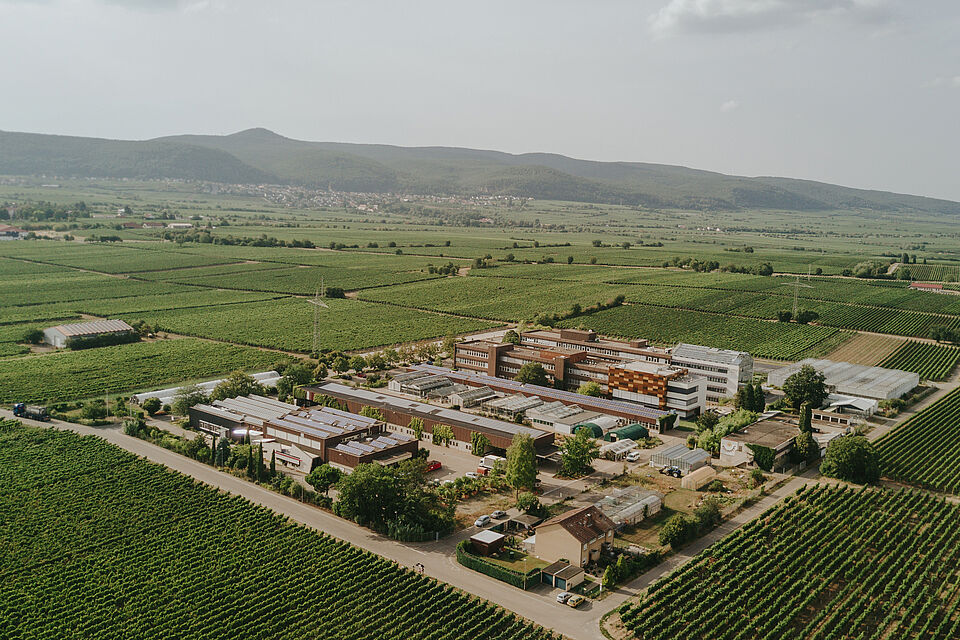
The research of the professors at the Wine Campus Neustadt is particularly integrated into the research and development environment of the Rural Area Service Center (DLR) Rheinish Palatinate.
At the Rural Area Service Center (DLR) Rhenish Palatinate, applied research in viticulture, Enology and phytomedicine is carried out at a high scientific level. The range of courses on offer benefits in particular from the close integration with the tasks of the Rural Area Service Center (DLR) Rhenish Palatinate in experimentation, consulting and training and the associated transfer of research results into teaching and practice.
The six professors at the Wine Campus conduct research together with scientists from the Rural Area Service Center (DLR) Rheinpfalz in accordance with the following objectives:
- Adaptation to climate change
- Competitiveness of regional and sustainable products
- Sustainable environmental protection
- Resource-efficient and gentle processes
- Technology transfer and digitalization
Research area
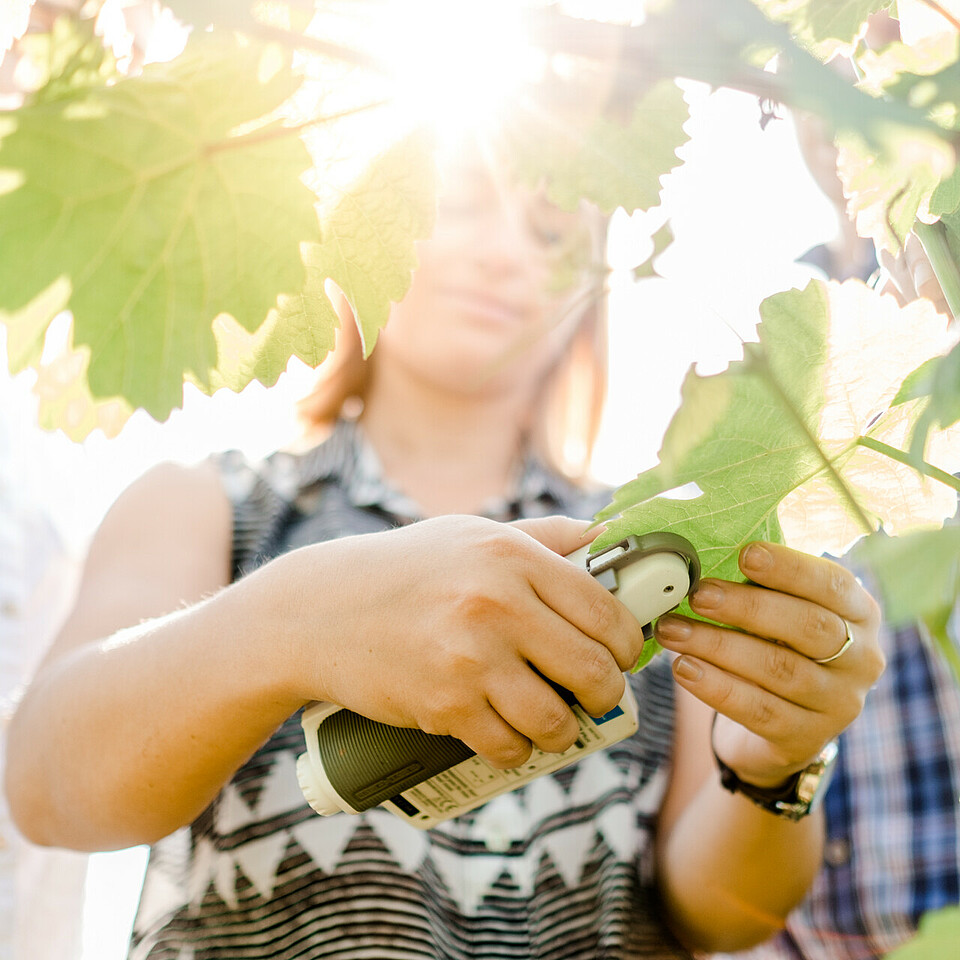
Viticulture and plant physiology
The aim of viticultural research is to clarify the influence of quality-enhancing cultivation measures on the material composition of the grape, in particular sugars, acids, aroma precursors, anthocyanins and phenols. In their entirety, these form the reservoir from which the valuable ingredients of the wine are formed during wine production. Ongoing research projects are investigating the genetic and environmental influences on the synthesis of aroma substances (monoterpenes) and colorants and flavorings (flavonoids, stilbenes) as well as on the physiology of the berries/clusters (size, number, berry skin firmness). Further research focuses on the optimization of cultivation systems and viticultural measures in order to investigate the necessary adaptation of production systems to climate change and the resulting increase in late frost events and heat waves.
Subject
Phytomedicine
Numerous diseases and pests threaten the health of the grapevine and thus jeopardize grape yield and quality. Research into the effective and environmentally friendly control of pathogens is therefore a focal point of the work in viticultural plant protection. In addition, diagnostics, consulting and teaching as well as the testing of plant protection products are also important fields of activity.
Research area
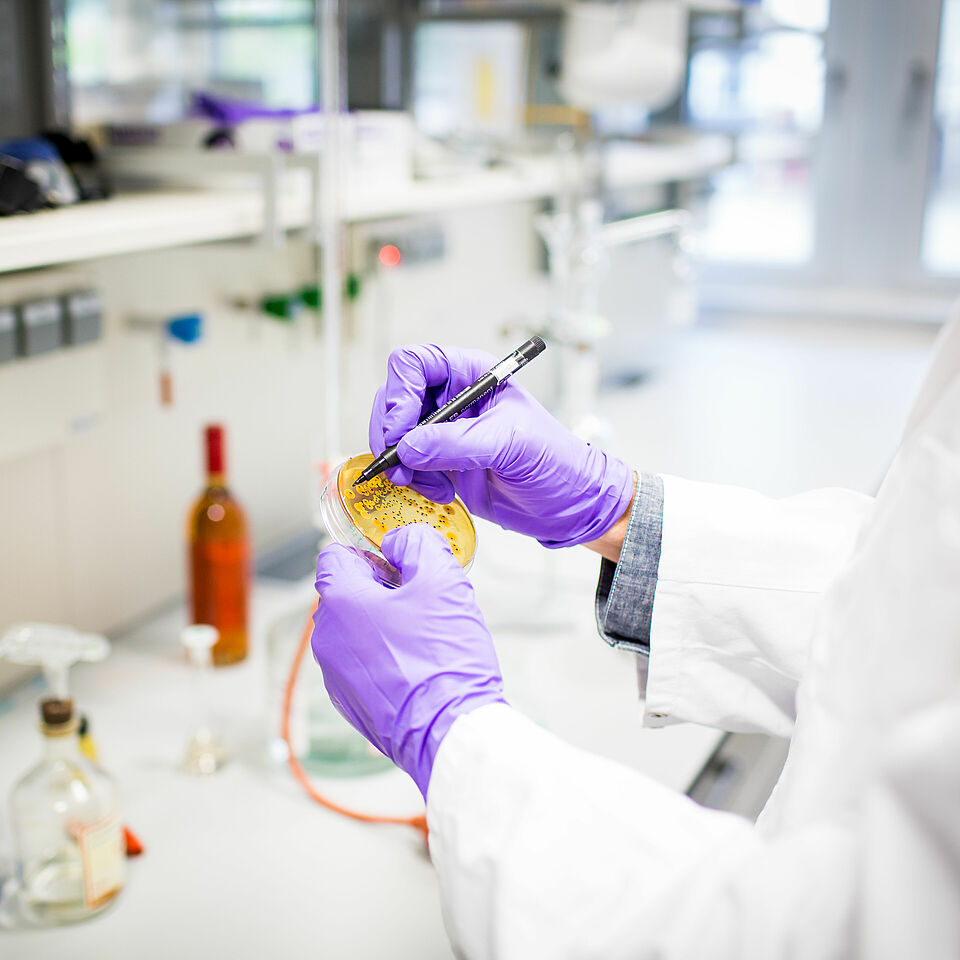
Microbiology
Microorganisms play a central role in winemaking, be it in alcoholic fermentation by yeasts or malolactic fermentation by lactic acid bacteria. At the same time, various harmful organisms can negatively influence the ingredients of the wine in almost all phases of production. Students acquire theoretical and practical knowledge of the most important microorganisms that play a role in winemaking. The detection of microorganisms is also an important focus of teaching and research.
Specialty
Enology, wine analysis and sensory analysis
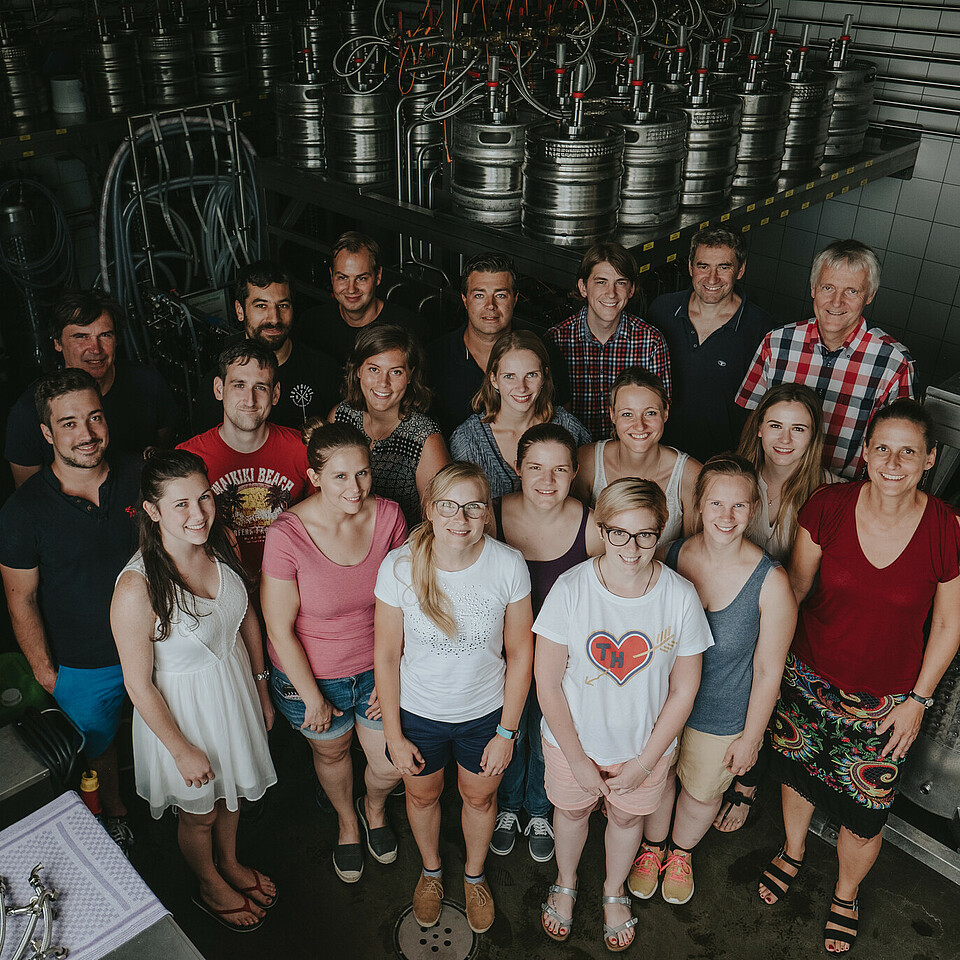
Oenological research at the Wine Campus Neustadt deals with a variety of current and practice-oriented issues relating to winemaking, starting with grape reception, through the processing of mash and must, to wine maturation, bottling and storage of the bottled wines. Using state-of-the-art sensory and chemical analysis, the complex relationships between oenological influencing factors and molecular changes in wines are clarified. Through globally networked research collaborations, oenological research at the Wine Campus Neustadt is one of the world's leading institutions in the field of innovative wine technologies, aroma analysis and polyphenol research.
Specialty
Marketing
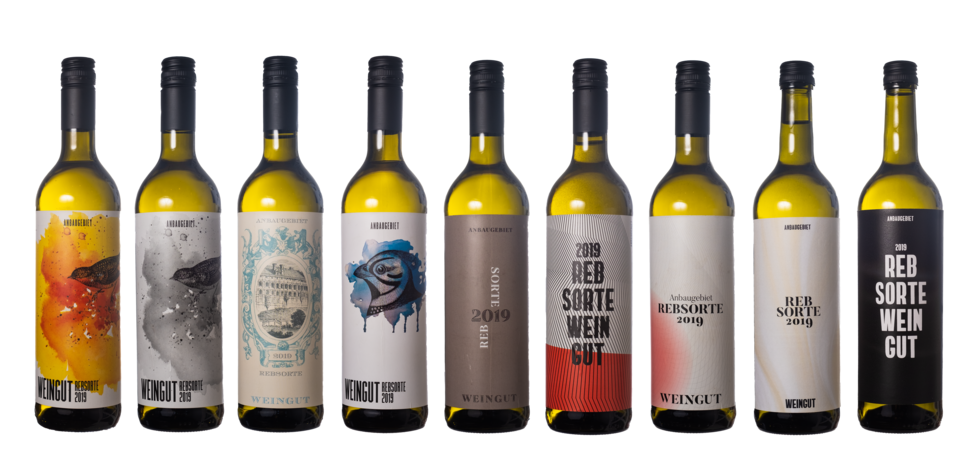
The field of marketing in wineries has changed significantly in recent years. Not only have new digital possibilities been added, but also new challenges, for example in the presentation of a product and its characteristics. The Marketing research area at the Wine Campus Neustadt is dedicated to these topics.
Specialty
BUSINESS ADMINISTRATION
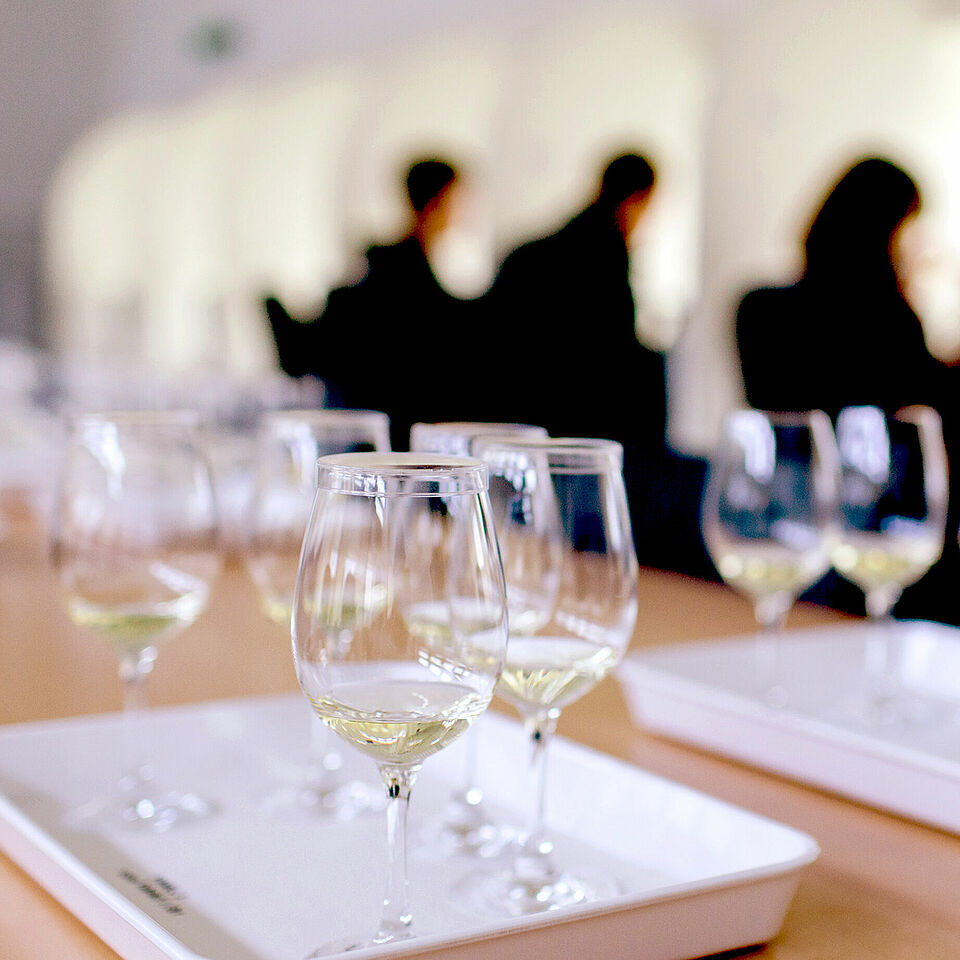
Success in the wine industry is increasingly dependent on professional business management and optimized marketing. Business administration at the Wine Campus makes a significant contribution to the training of entrepreneurial skills. Practically relevant topics are taken up and explored through globally networked research with an international perspective. The three core research areas include strategy, organization and innovation.
Daring to do science
Key figures
Currently, around 20 individual projects with a volume of almost 3 million euros are working on application-oriented research topics ranging from vine physiology and viticultural technology to aroma chemistry and wine market research. Currently, 15 doctoral students, three post-docs and six technical assistants are employed in the third-party funded projects, 90% of which are generally funded by the public sector. The doctoral students form a doctoral college in which regular scientific reporting takes place. All doctoral theses at the site are carried out in cooperation with universities in Germany and abroad.
→ 16 ongoing research projects (annual volume 3 million euros)
→ 15 ongoing university collaborations in Germany and abroad
→ 120 ongoing collaborations with business partners
→ 12 doctoral students, 3 post-docs and 6 technical assistants
Scientists and academics
→ Click on the respective profiles to access the research projects and research groups
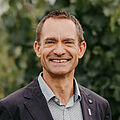
Prof. Dr. Jochen Bogs
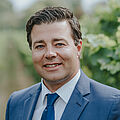
Prof. Dr. Marc Dreßler
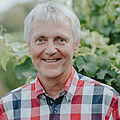
Prof. Dr. Dominik Durner

Prof. Dr. Laura Ehm
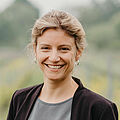
Prof. Dr. Ulrich Fischer
Prof. Dr. Lena Keller

Dr. Andreas Kortekamp

Prof. Dr. Maren Scharfenberger-Schmeer
→ Are you interested in a PhD at the Wine Campus Neustadt? We will be happy to advise you on the concept, application and time management! Please contact one of the six full-time professors directly, depending on your subject area.
We look forward to hearing from you!
Hands-on research: Networking, exchanging and discussing
Graduate Research Forum
The Graduate Research Forum is a platform for the regular transfer of knowledge in the field of research. Current research projects of the working groups are presented and discussed here. Thanks to the active participation of different specialist areas, the topics are examined from different perspectives, which often generates new ways of thinking and problem-solving. Guest lectures by scientists from other institutions enrich the seminar and are always welcome to present their work. Following the scientific program, a small get-together invites participants to linger and exchange ideas.
Contrary to the name, not only graduates are allowed to participate in the monthly event. Everyone who is interested in research and science is welcome.
Contact: Prof. Dr. Lena Keller

Next date:Campus Events