
About the Project
Organizational Unit
XXX
Management
Prof. Dr. Marc Dressler
Project Number
XXX
Research Area
Innovation and Transformation Management
Grant Program
Funded by the European Union (Grant No. 101.132.223)
Project Website
Category
Sustainable Wine Industry
Duration
April 2024 – March 2028
Background and project objective
The EU also aims to reduce the intensive use of pesticides in viticulture. Fungus-resistant grape varieties (PIWIs) offer a way to reduce pesticide use and ease the burden on winemakers. The EU has commissioned researchers from France, Spain, Italy, Germany, Switzerland, Austria, and Serbia—including viticultural institutes and wineries —with the GrapeBreed4IPM project to further develop disease-resistant grape varieties as well as the markets and consumer demand for PIWI wines.
Project Structure:
- Research and Innovation Action (RIA)
- 7 work packages, 38 deliverables, 28 milestones
Current survey as part of the EU project GrapeBreed4IPM
What is it all about?
As part of the GrapeBreed4IPM research project, we are currently surveying the mood across Europe regarding the transformation in the wine industry. The focus is on new robust grape varieties, sustainability in viticulture and future-proof production strategies.
Our current survey (PANEL 2.0) is aimed at wine experts, producers and consumers alike. The aim is to identify trends, opportunities and challenges up to 2030 and to evaluate them together from different perspectives. With your help, we would like to gain a multi-voiced picture from practice, science and the market - as a basis for an innovation-driven and resilient wine industry in Europe.
To the survey
Project structure
Overcoming Traditions Together – Initiating Transformations
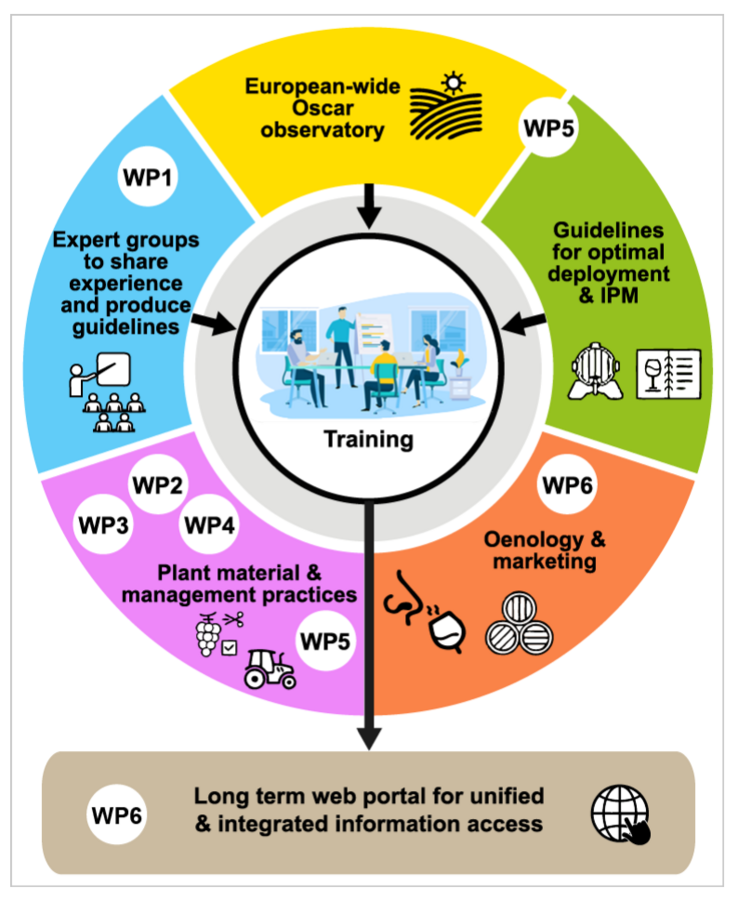
The Wine Campus and the Rural Area Service Center (DLR) Rhenish Palatinate play a coordinating role in the project (WP1) and ensure transparency across all seven work packages, as well as the scientific foundations within them. The Wine Campus’s research findings to date serve as the basis for international surveys. Sustainability, consumer expectations, and implementation challenges are assessed in a consistent manner across countries. Through empirical data, the project contributes to sustainable wine production in Europe and to system innovation that spans the value chain. Overcoming barriers and creating solutions with experts, thereby enabling cross-cutting learning and development.
Country-specific experts share their specialized knowledge to conduct a country-specific status quo analysis. Additionally, virtual meetings to exchange experiences are planned every six months, and newsletters will provide ongoing updates on the state of research beyond the activities of this work package. To shape the future of Piwi’s in a needs-oriented manner, an in-person Design Thinking workshop is planned for 2025, which will innovatively incorporate the expectations of all stakeholder groups. The regional teams will evaluate the current state of production and marketing in order to jointly define cross-national measures to increase the appeal of Piwi’s and the marketing success of wines with sustainability.
Further information:
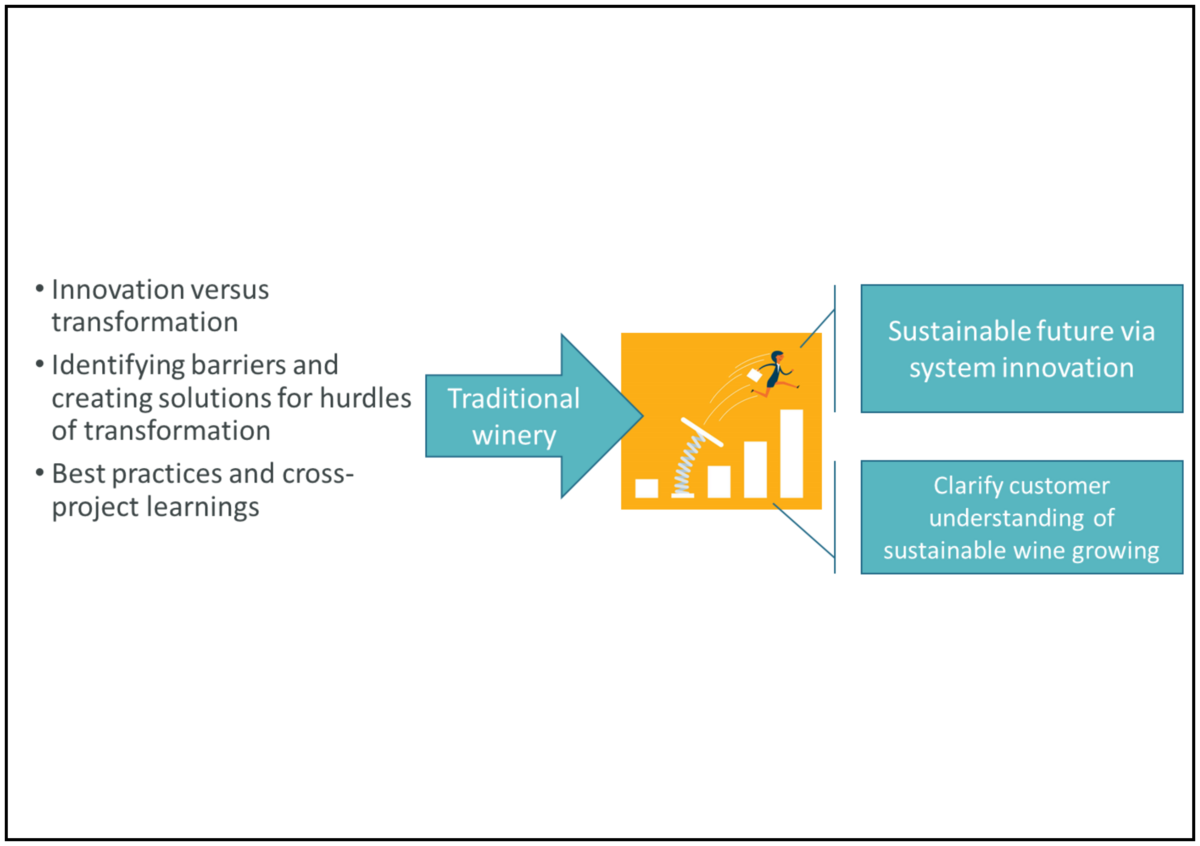
Methodology
By experts for experts
Europe-wide integration of qualitative and quantitative research: expert panels, producer/consumer surveys, experiments, systematic analysis of success stories and best practice. Carrying out market analyses and research in order to compare the country-specific penetration of PIWI grape varieties and ensure the transfer of knowledge.
NEWS
Contact person
Contact us now!

Katharina Kleiner

Prof. Dr. Marc Dreßler

Miriam Jäger