
Profile of the degree program
| Study model | Dual | Bachelor's degree* + winemaker training (*Bachelor of Science) |
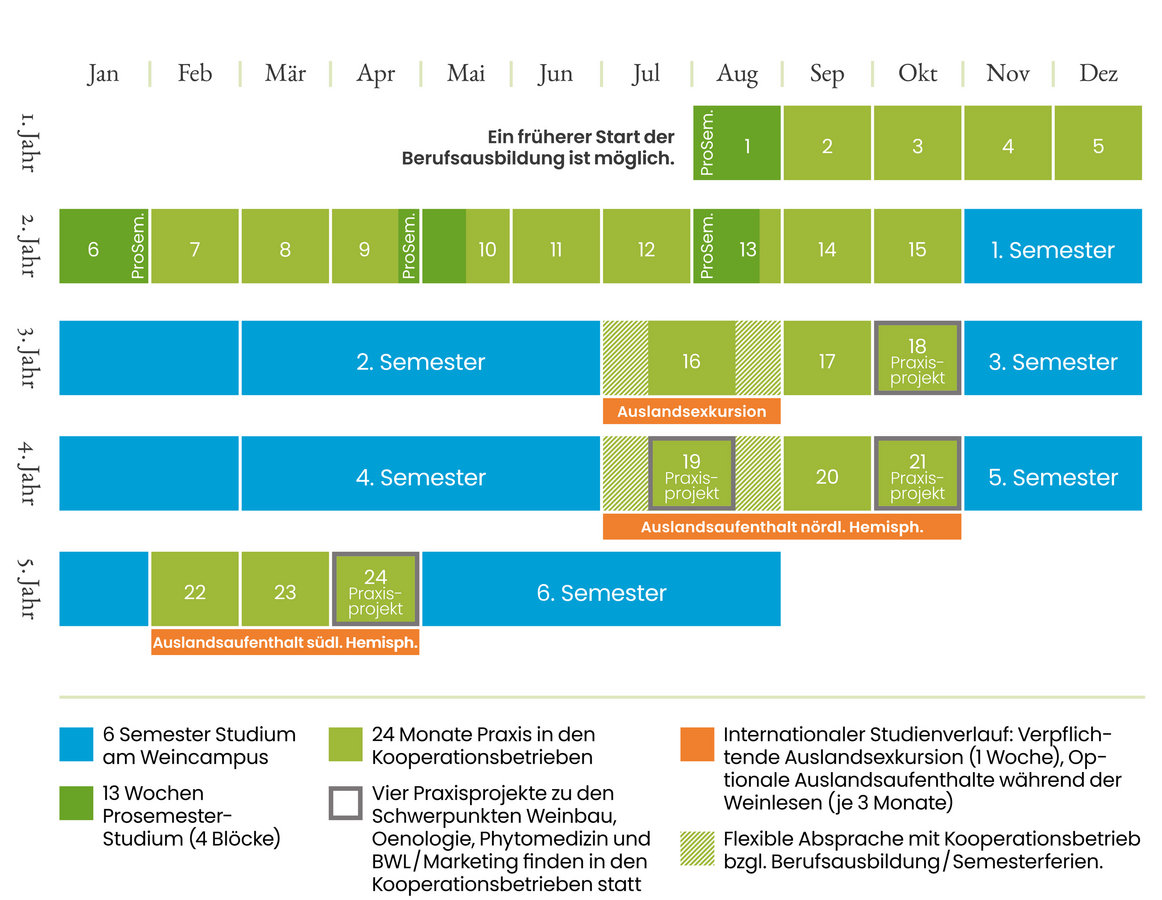
| Duration | 4 years | 6 semesters standard period of study / 24 months vocational training |
| ECTS CREDITS | 210 | |
| Language of instruction | German | C1 of the Common European Framework of Reference for Languages |
| Admission | NC-free | |
| Tuition fees | None | Regular semester fee |
| Start of studies Prosemester | August 1 | 13 weeks à 4 blocks |
| Start of studies 1st semester | November | The lecture period deliberately begins in November after the fall phase in order to take into account the work peak in the wineries |
| Application deadline | July 15th | Completion of the application form and submission of application documents |

Veronika Trum
Opening hours registrar's office
Monday to Friday 9:00 - 16:00








About Us
Meet students and faculty, learn more about your options after graduation, and experience our green campus surrounded by vineyards.
Theory and practice - studying and training as a winemaker under one roof
The study plan
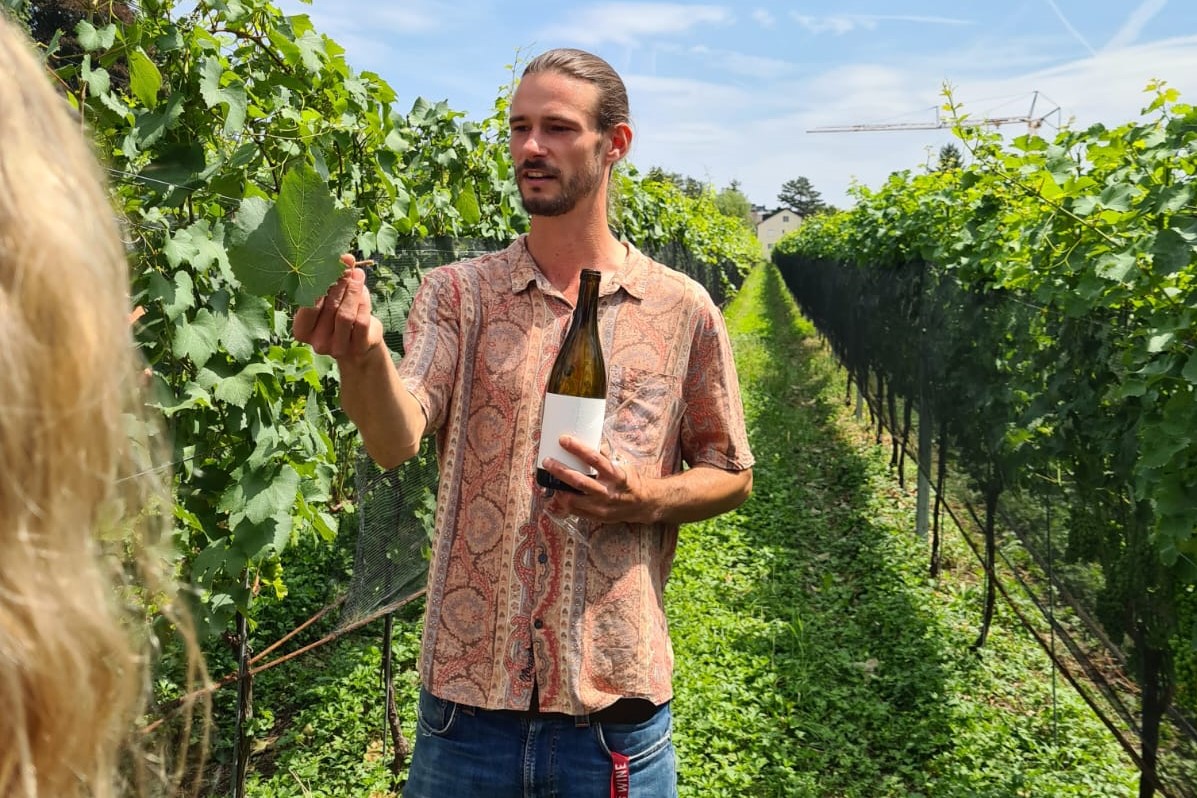
Excursion 2024: Wine Campus alumnus Brian Serr explains biological plant protection measures and uses a vine leaf to demonstrate typical infestation characteristics and their importance for wine quality in his vineyard.
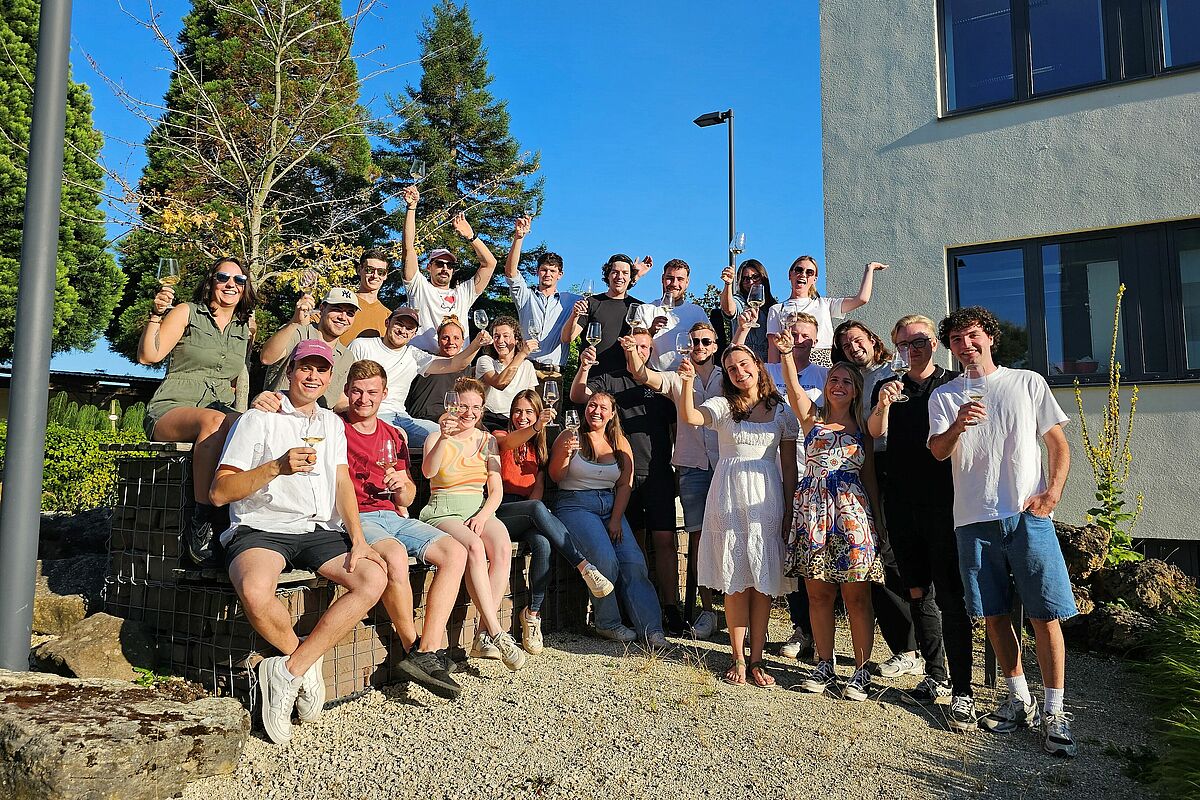
Traditional 6th semester barbecue after the last exam of the course on campus (summer, 2024)

Student Madeleine Römer microscopes yeasts as part of the microbiology laboratory in the 3rd semester
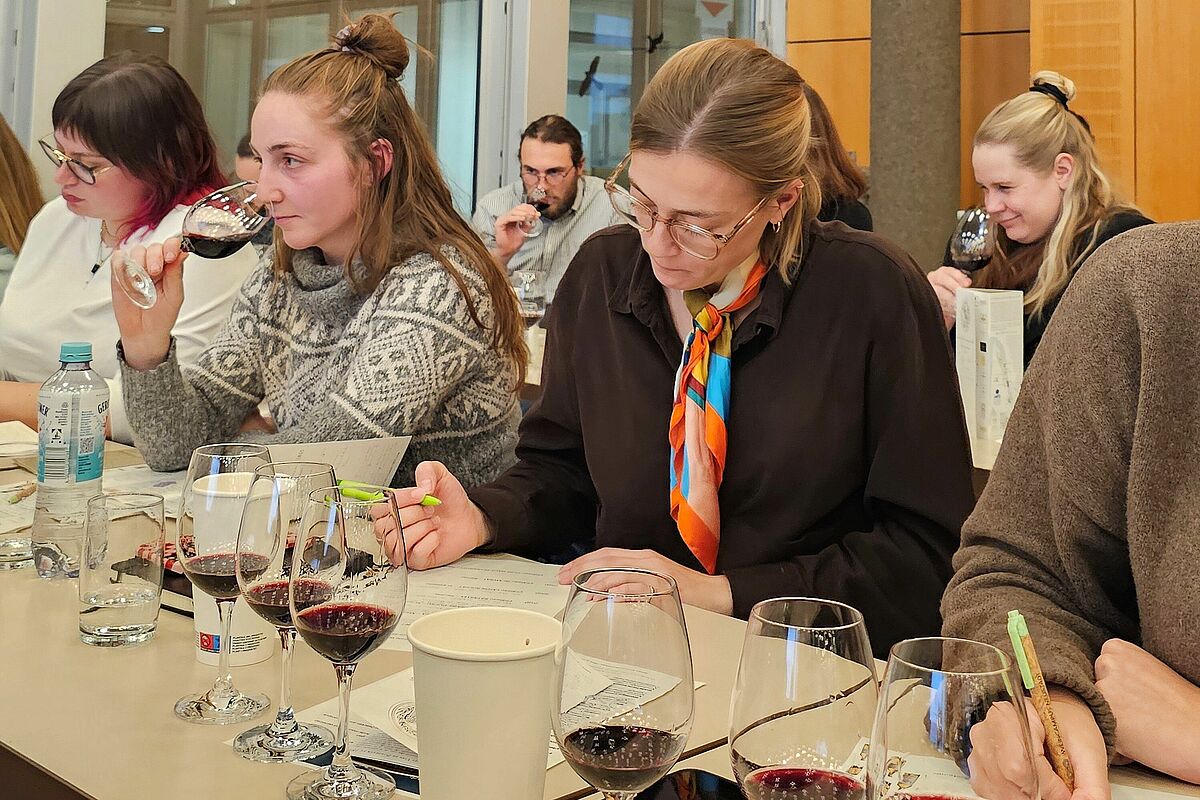
Bordeaux Masterclass 2025 with Markus Del Monego and Philippe Castéja in the auditorium: students taste wines
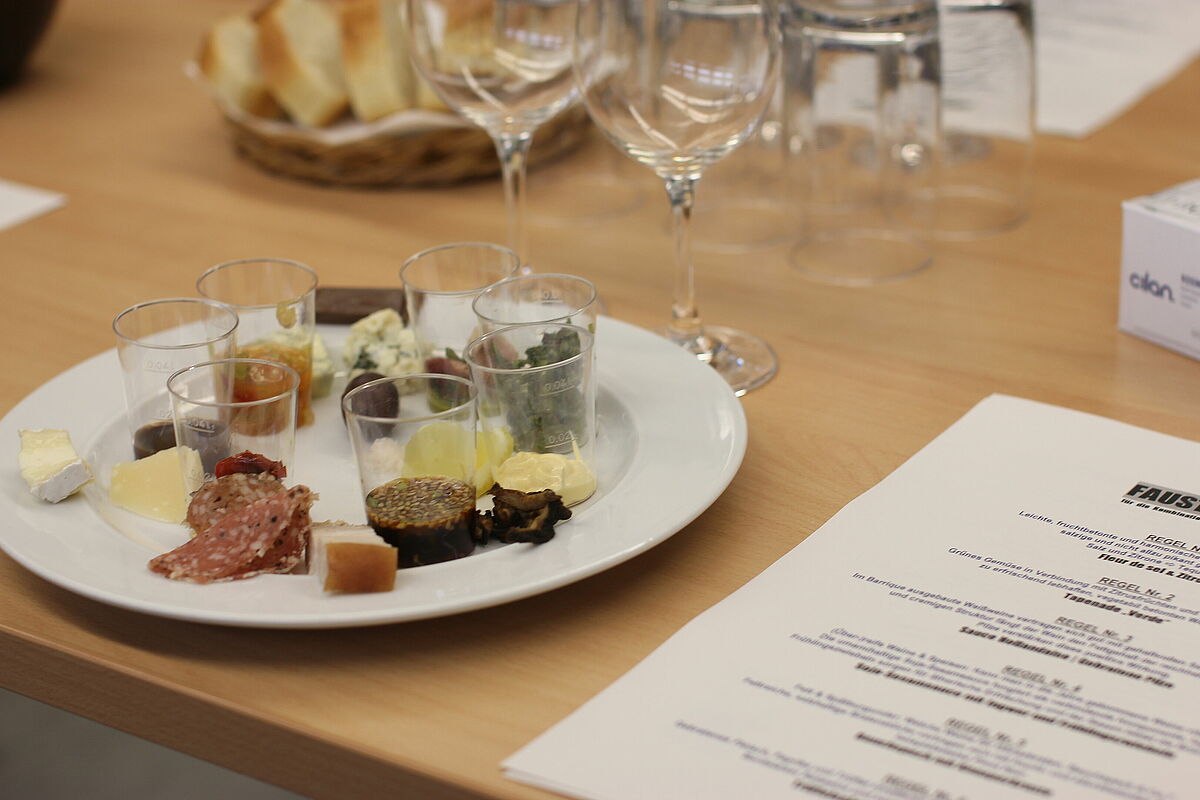
Lecture "Wine and Food", 4th semester, sensory laboratory
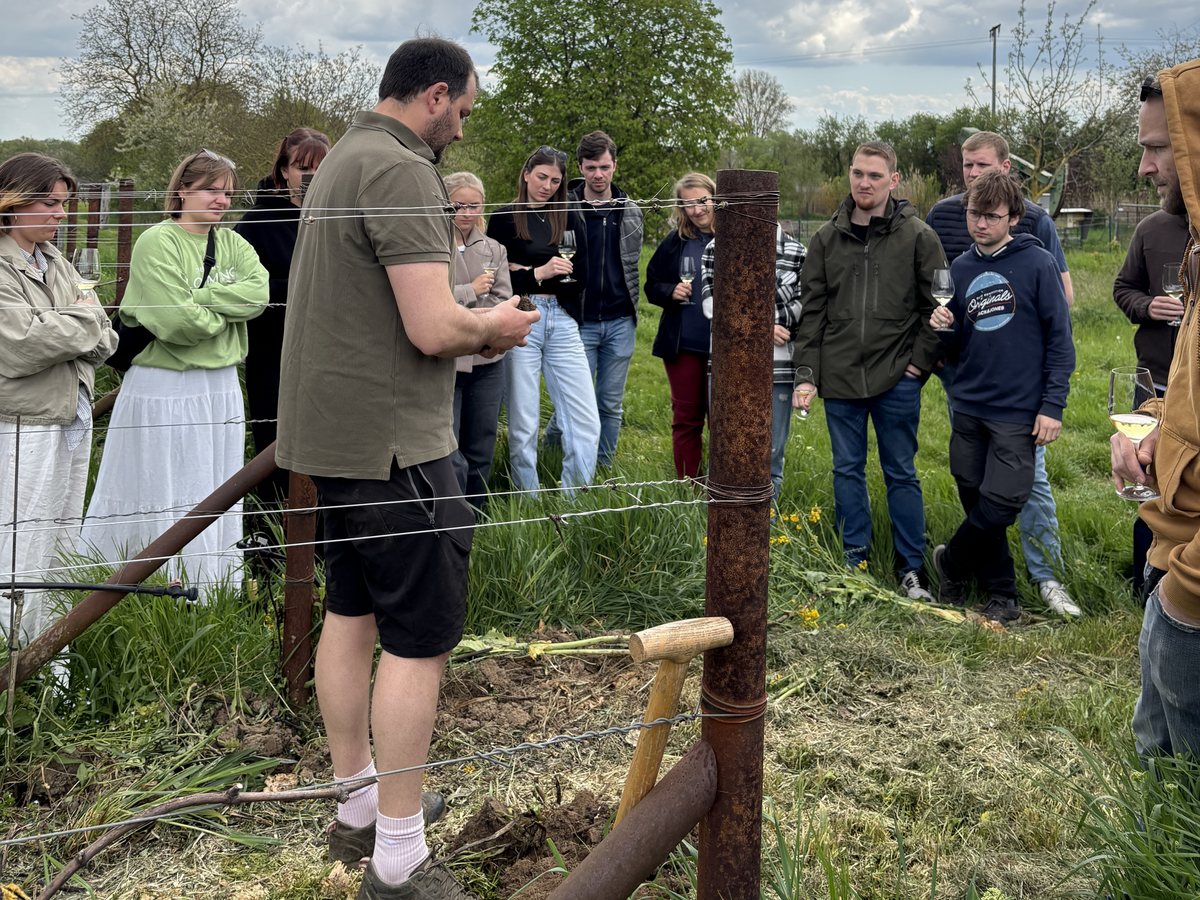
A visit by fourth-semester students to the Rummel Winery in Landau as part of the "Ecology and Environmental Protection" course. Using a soil sample, the students discuss the importance of cover crops and humus formation.
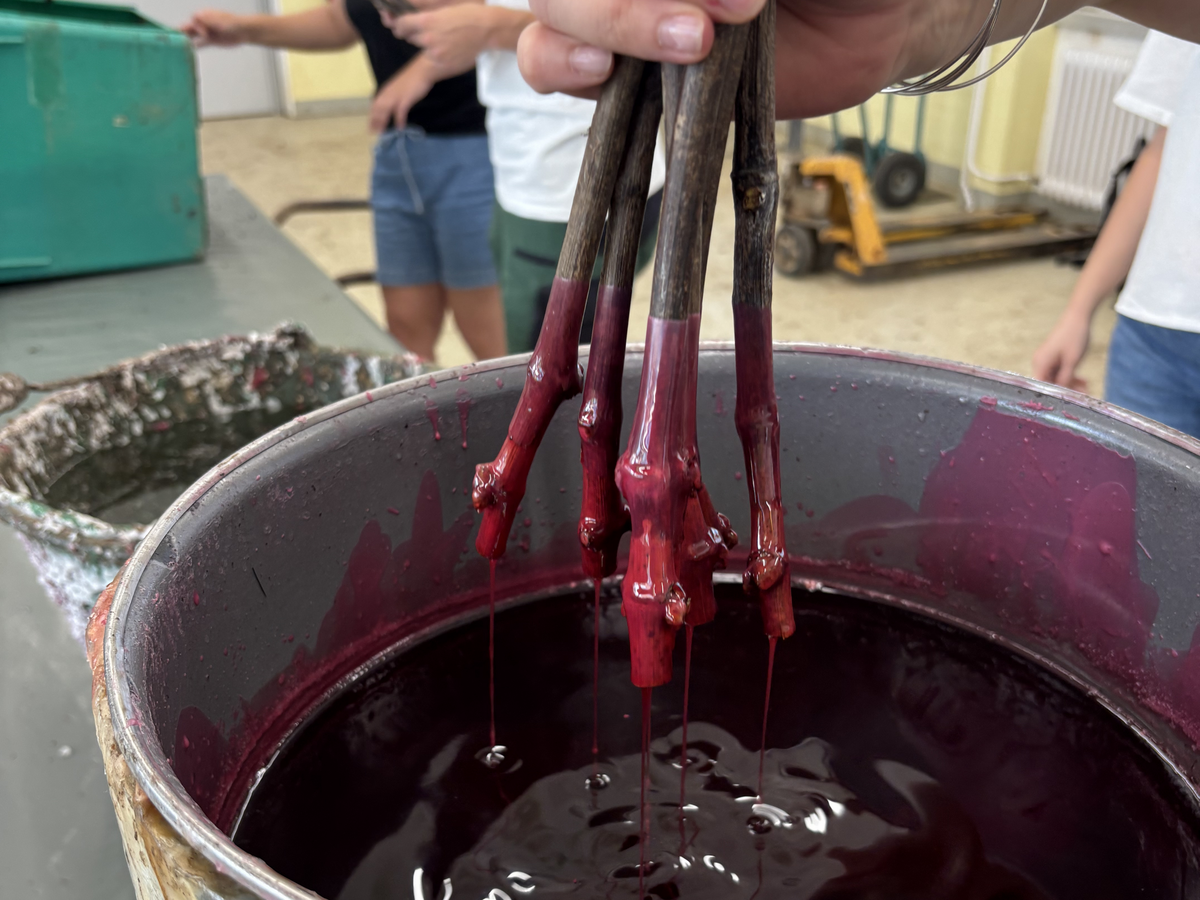
The freshly grafted scions and rootstocks are protected by a layer of wax while they fuse together. To do this, the grafting site is dipped in hot paraffin mixed with plant hormones.
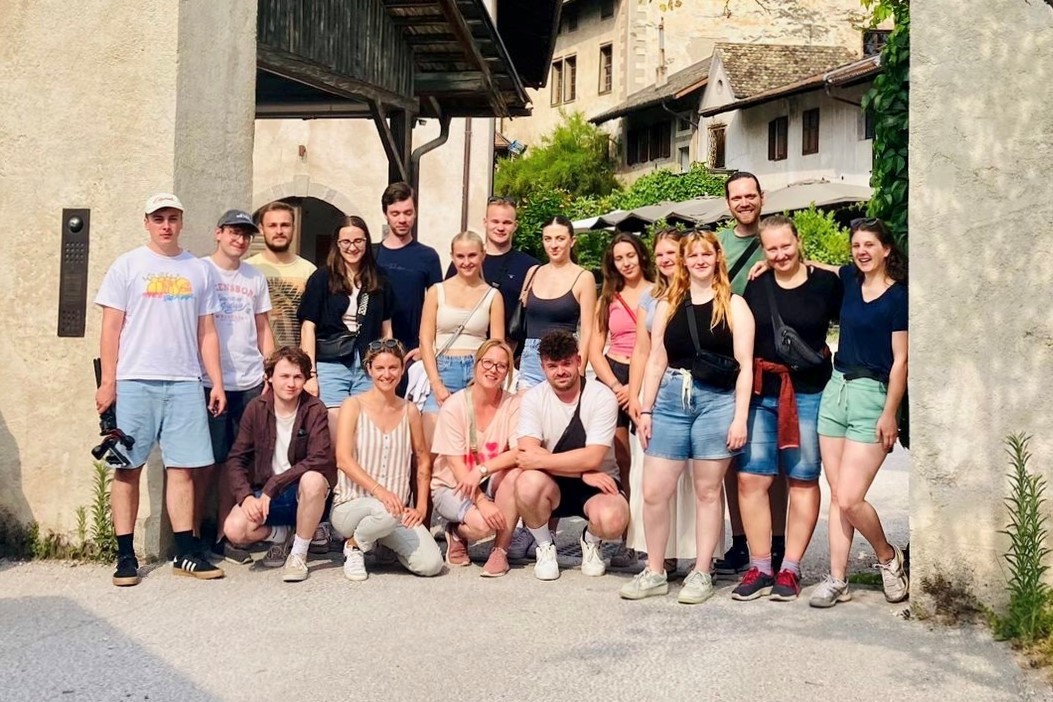
South Tyrol excursion 2025: Exciting insights into the Lageder winery, Arunda sparkling wine cellar, Elena Walch winery, Tramin winery, Manincor winery, Unterortl winery and Laimburg provincial winery.
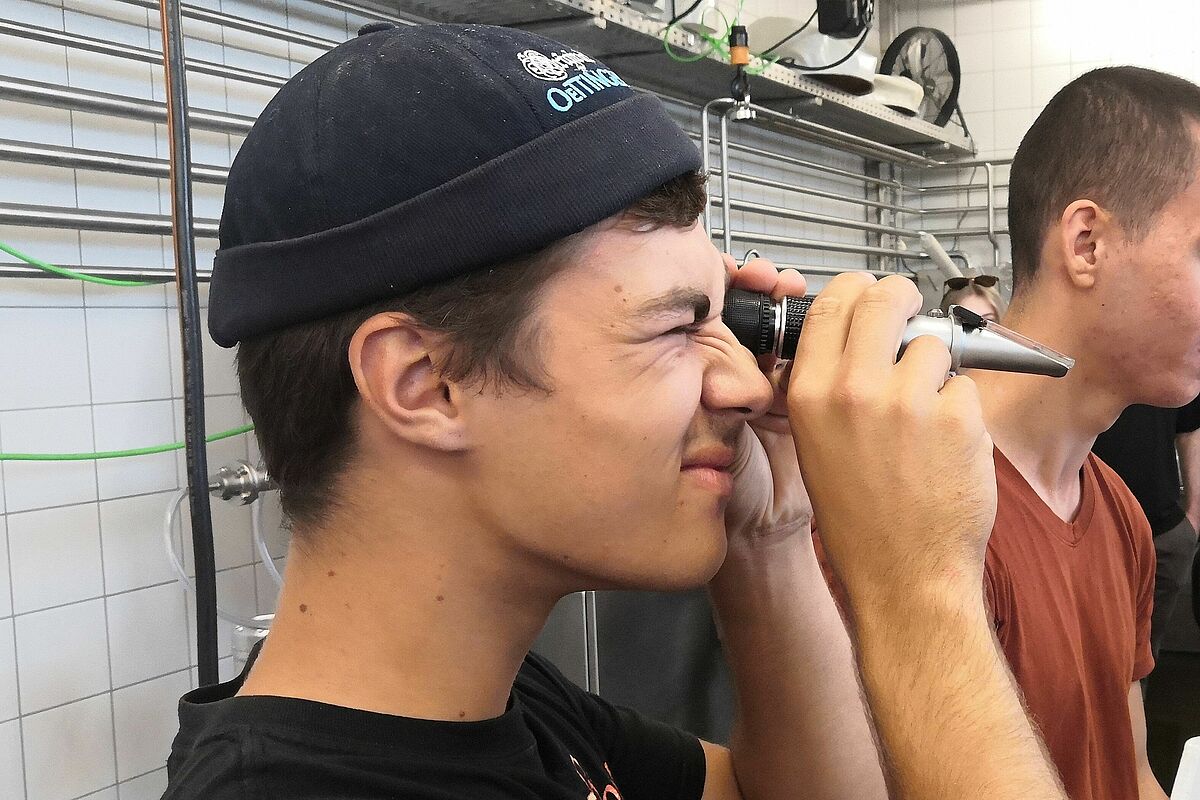
Student Vincent Stiburski checks the must weight of freshly harvested Solaris grapes as part of the oenology exercises in the prosemester.
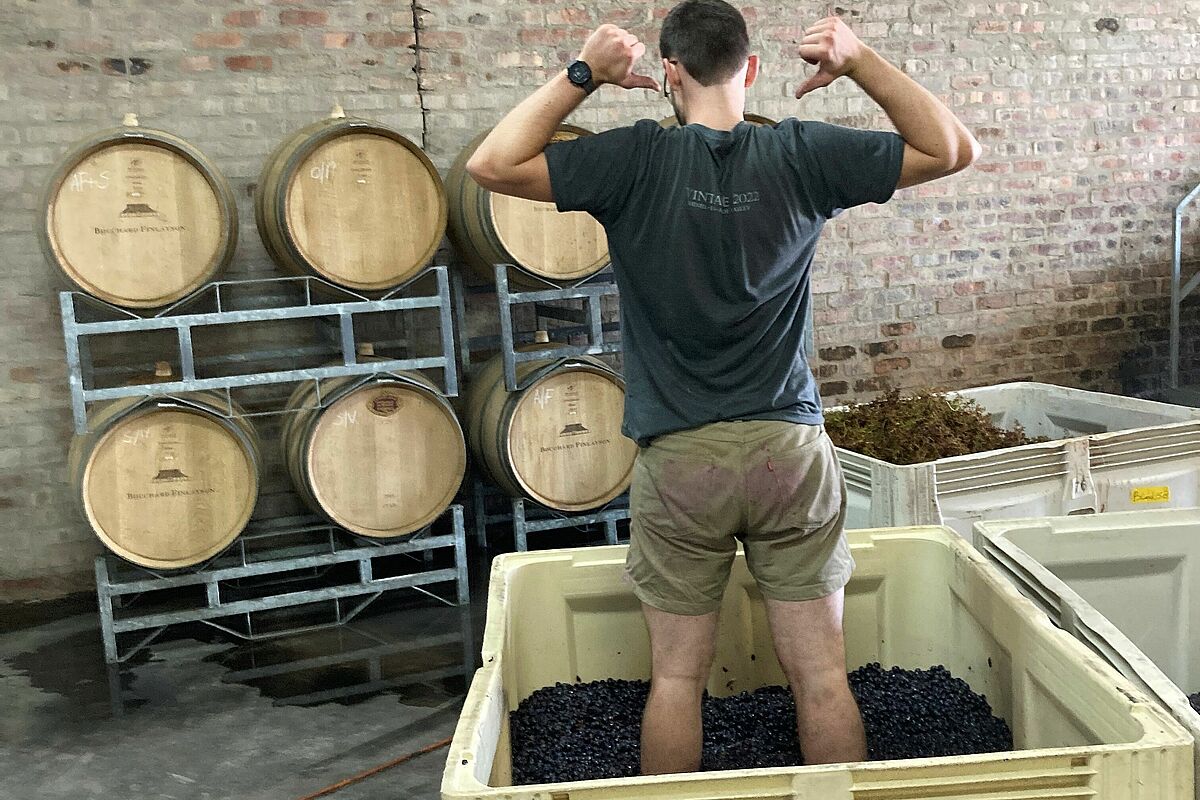
Student Joscha Ahrens during his stay abroad in South Africa (2022)
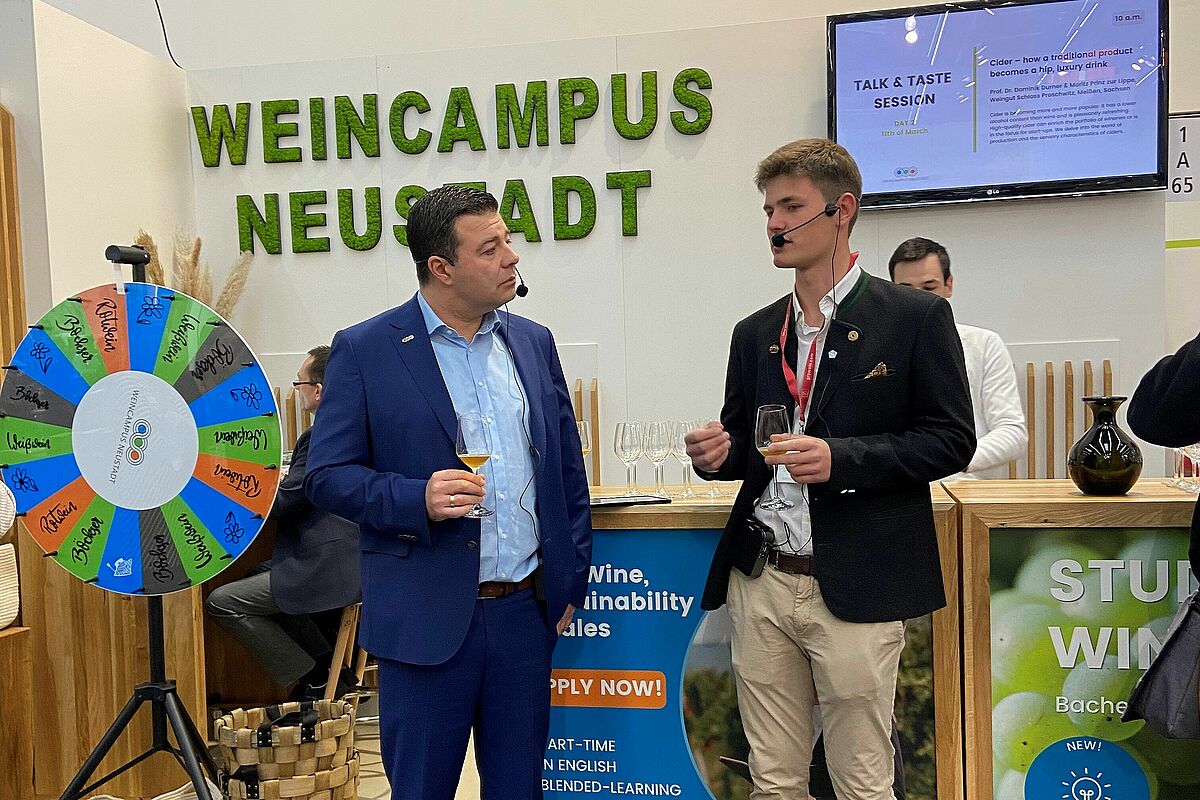
The Wine Campus at ProWein 2024 in Düsseldorf: Bachelor student Moritz Prinz zur Lippe from the Schloss Proschwitz winery in Meissen with Prof. Dr. Dominik Durner during a Talk & Taste session on the topic of cider.
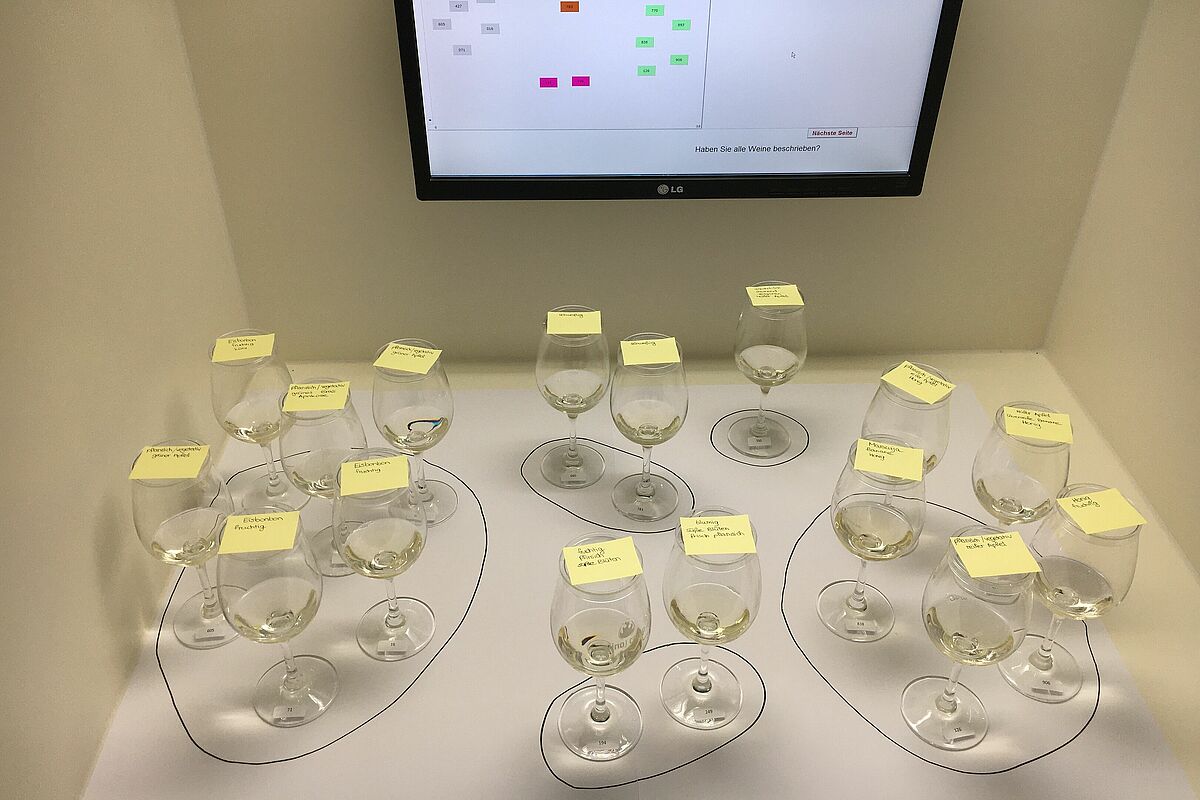
Exercise of the sensory quick method Napping, 4th semester, sensory lab
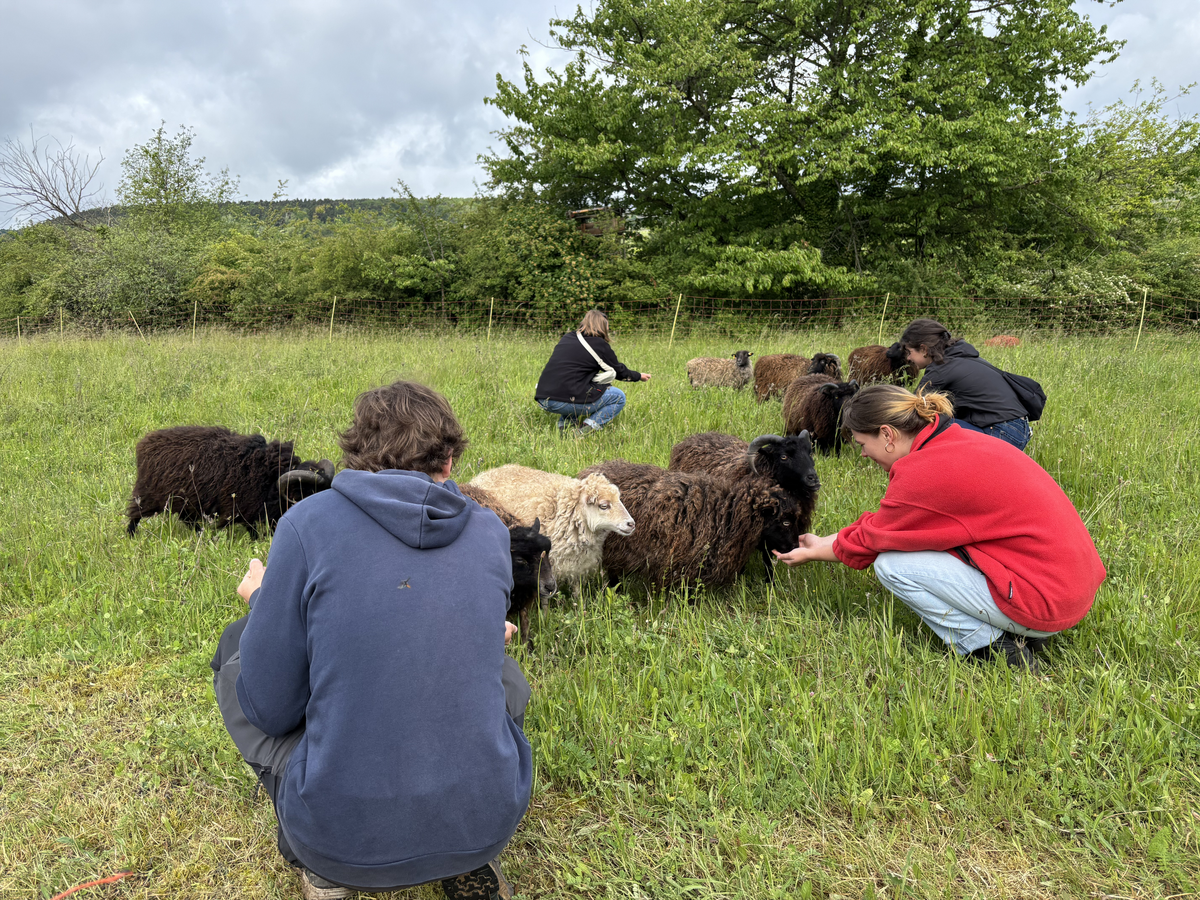
Fourth-semester students visit the Marie Adler Winery in Leistadt. The winery uses its flock of sheep to maintain the dry grasslands in the adjacent Berntal valley during the summer and to enhance the vegetation in the vineyards through grazing during the winter.
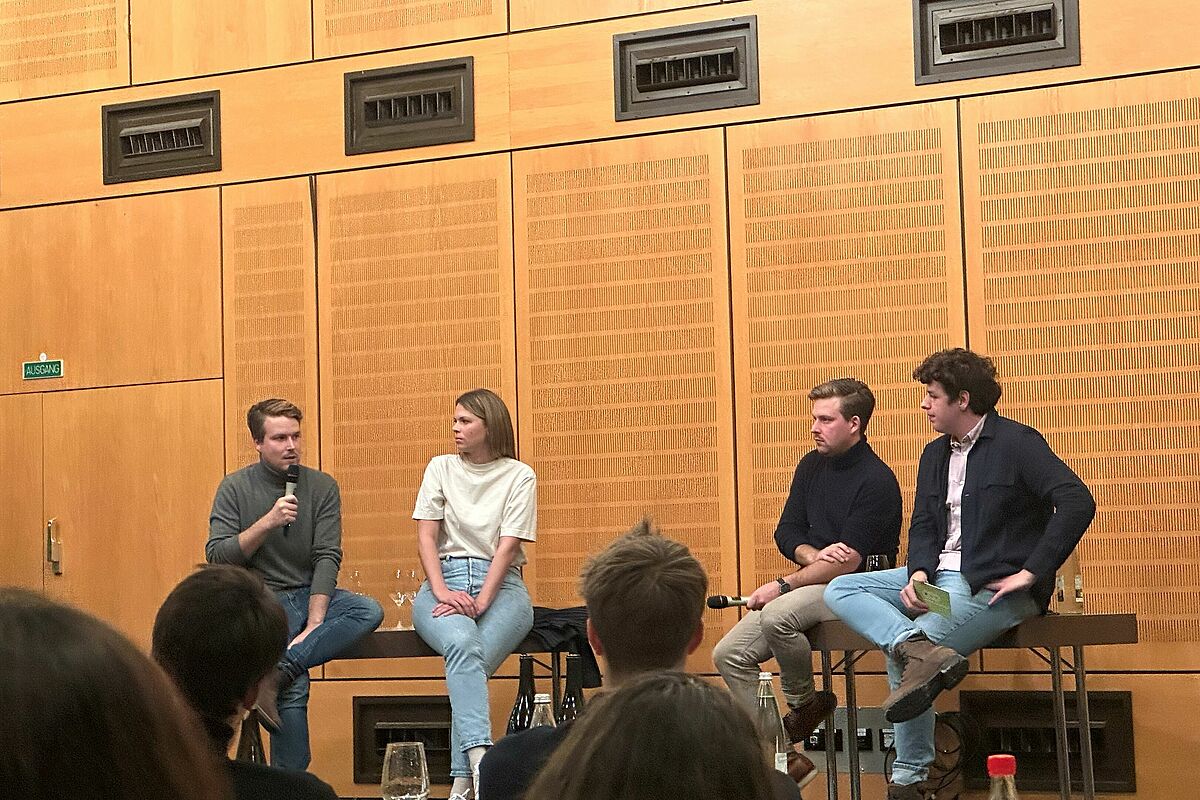
The student format Wine Campus Talk: students and wine enthusiasts network with wine personalities, winemakers, retailers and marketing companies in a relaxed atmosphere.
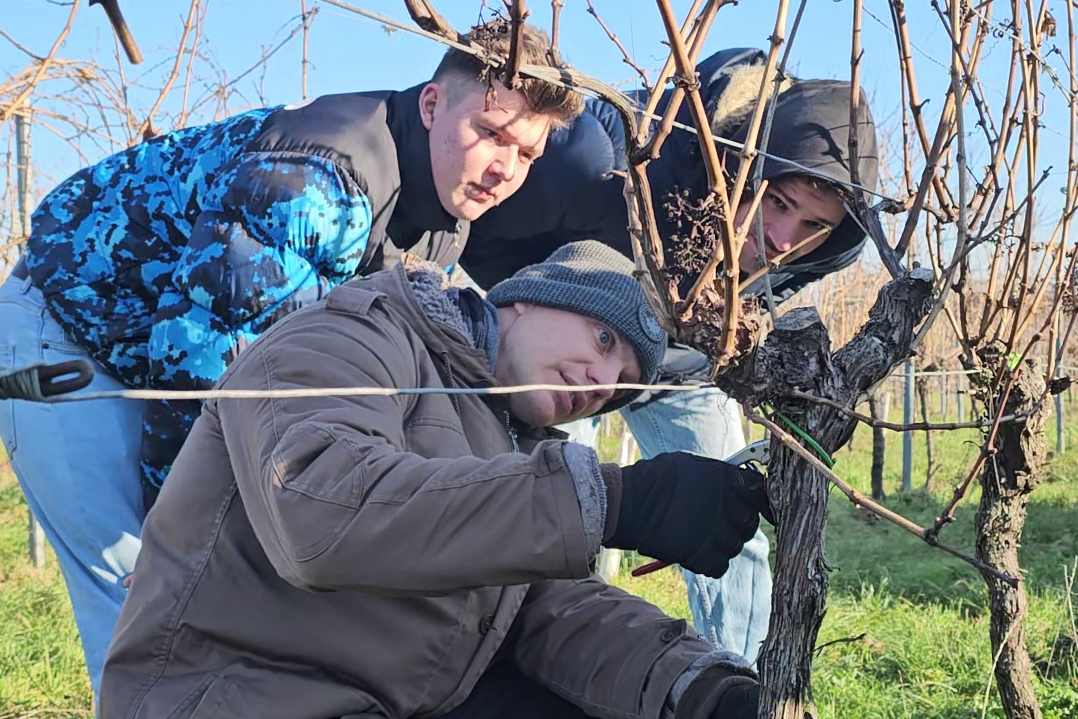
Sebastian Hörsch, viticulture assistant, explains the vine training systems and pruning methods to the prosemester students in the experimental vineyard on campus.
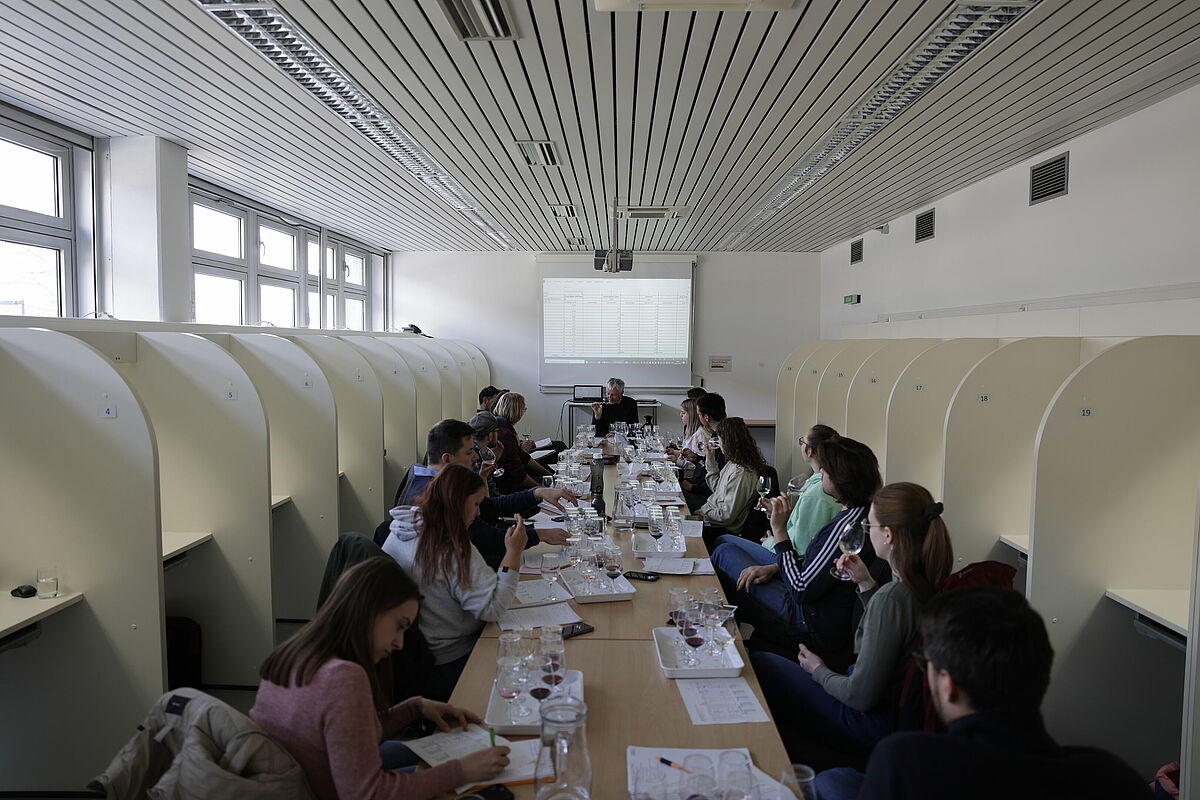
4th semester students familiarize themselves with positive aromas and off-flavours in Prof. Dr. Ulrich Fischer's sensory laboratory.
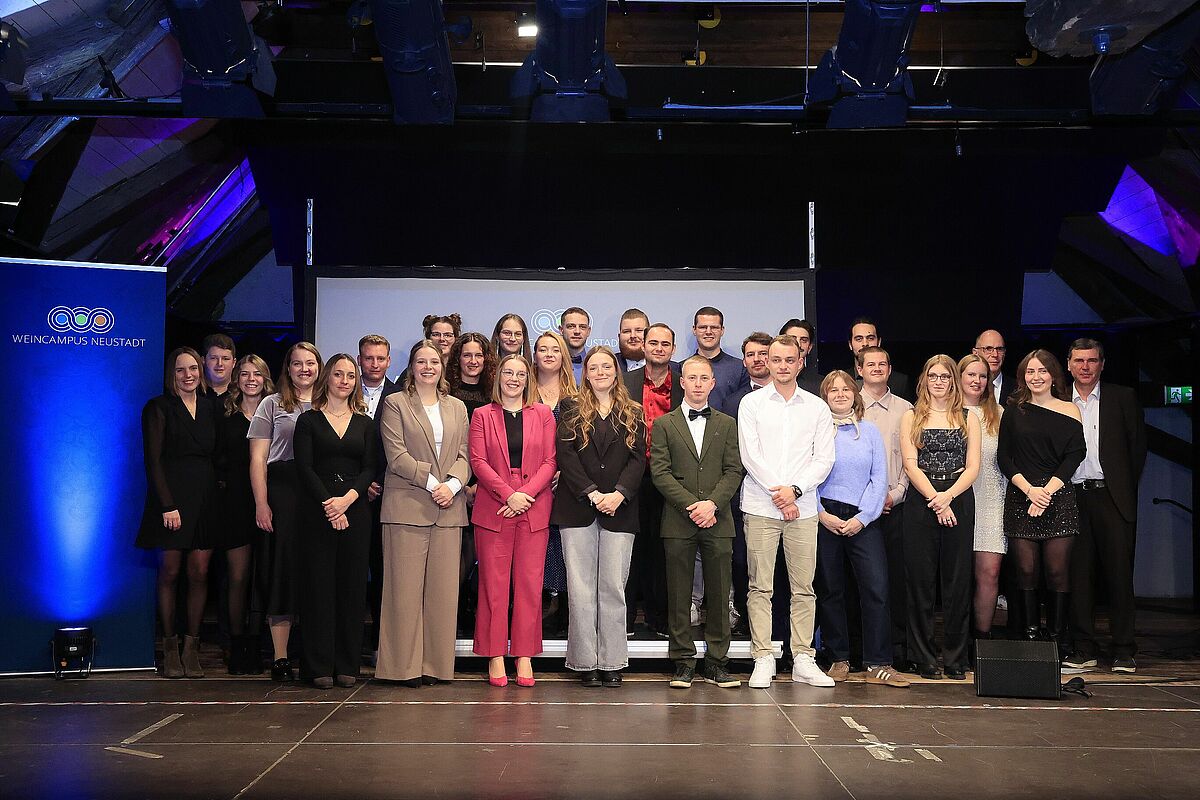
Academic graduation ceremony 2025: Farewell to students after completing their studies

Viticulture assistant Florian Schraut at the Oenological Technology Center.
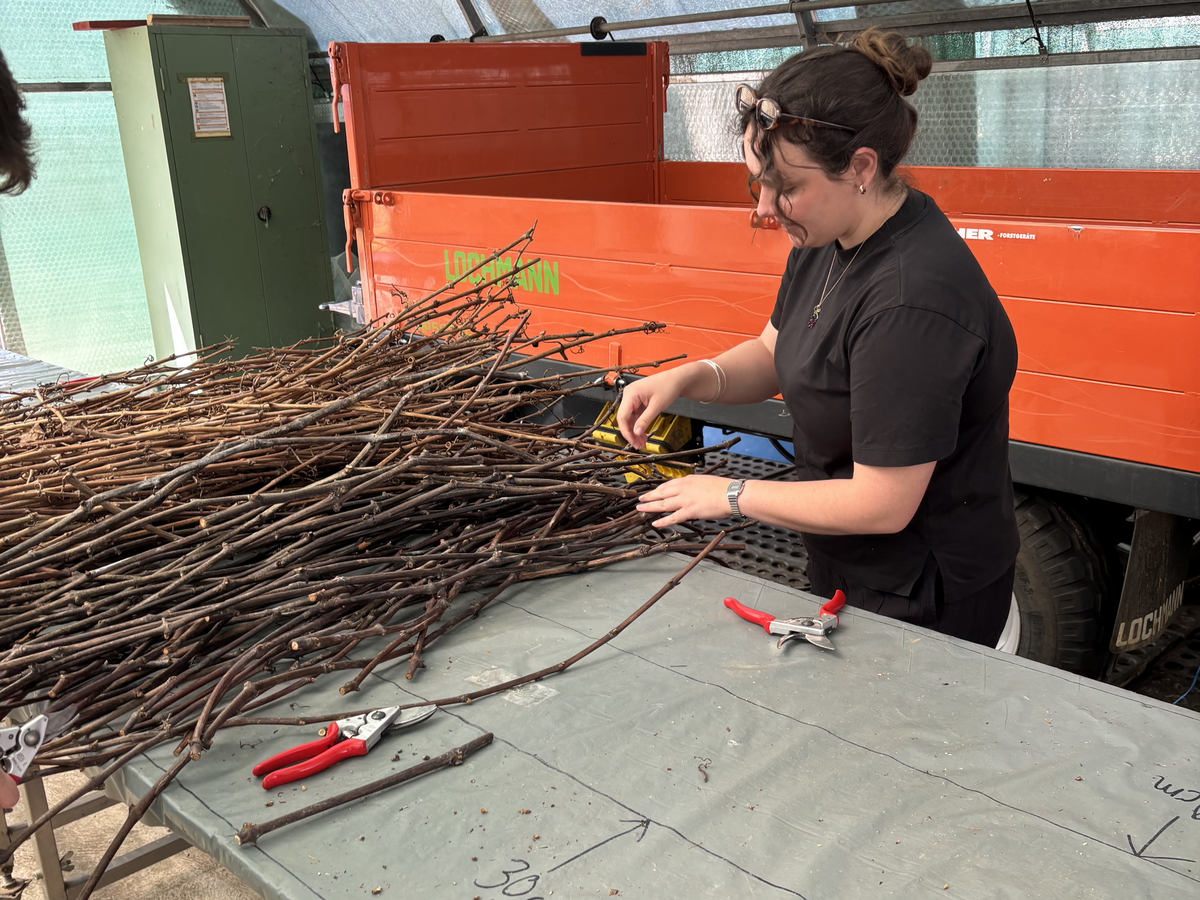
In the 6th semester, students carry out the steps of vine grafting themselves as part of a practicum. To do this, they first trim one-year-old shoots from rootstock vines and scions.
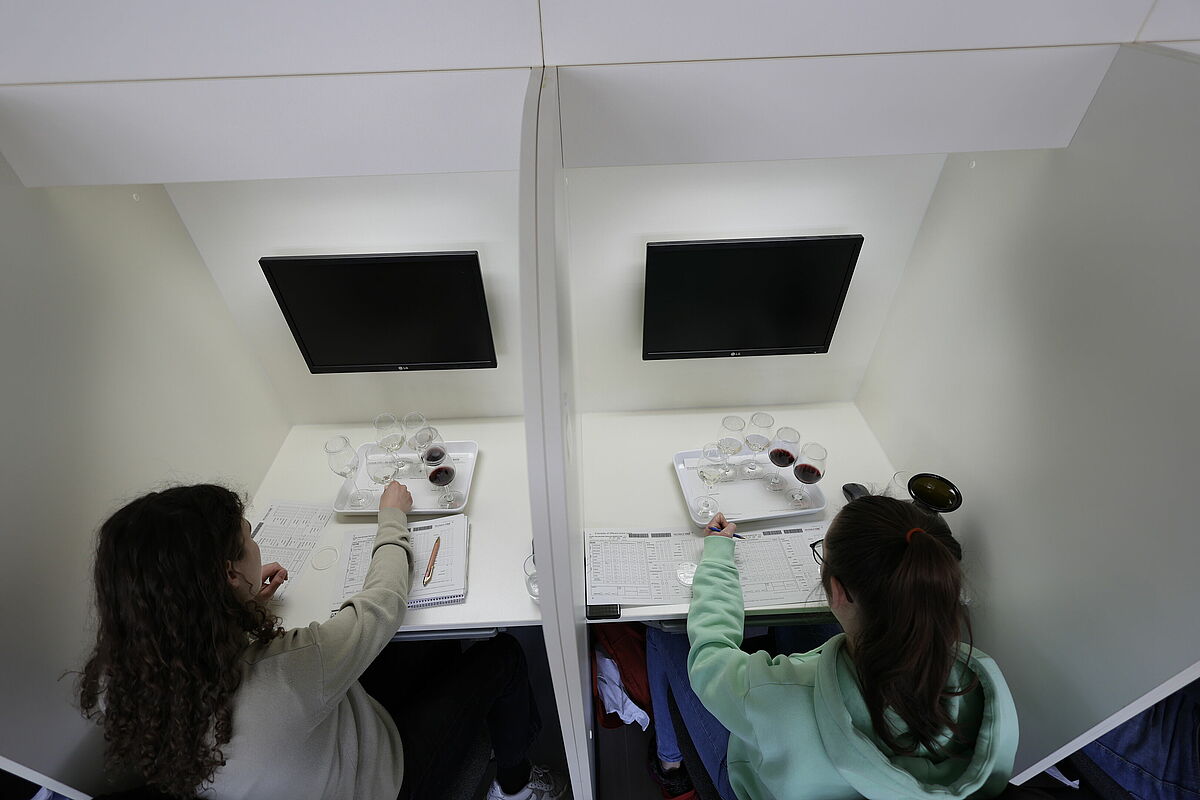
Students in the tasting booths in the sensory lab
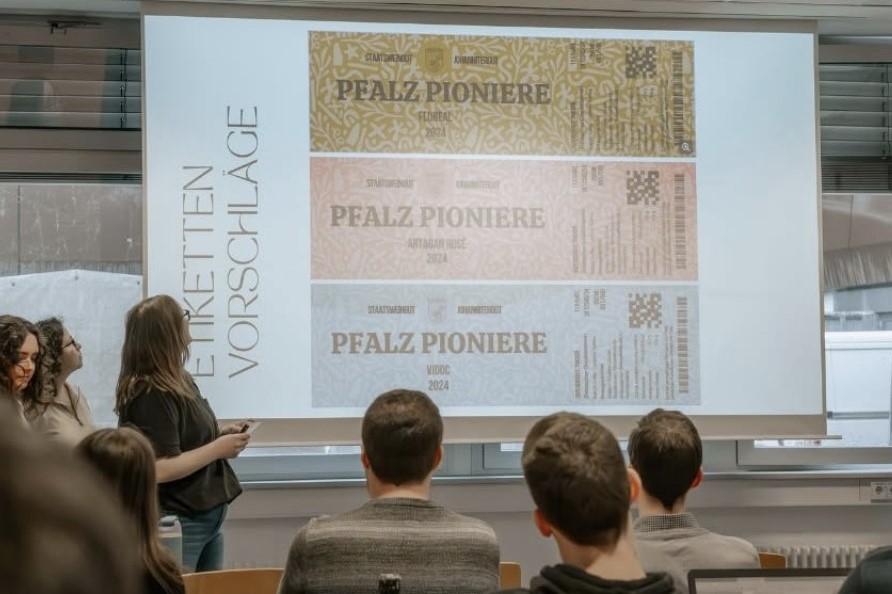
Marketing lecture: Development of labels for the new PIWI line of the St. John State Winery with Johannitergut Neustadt.
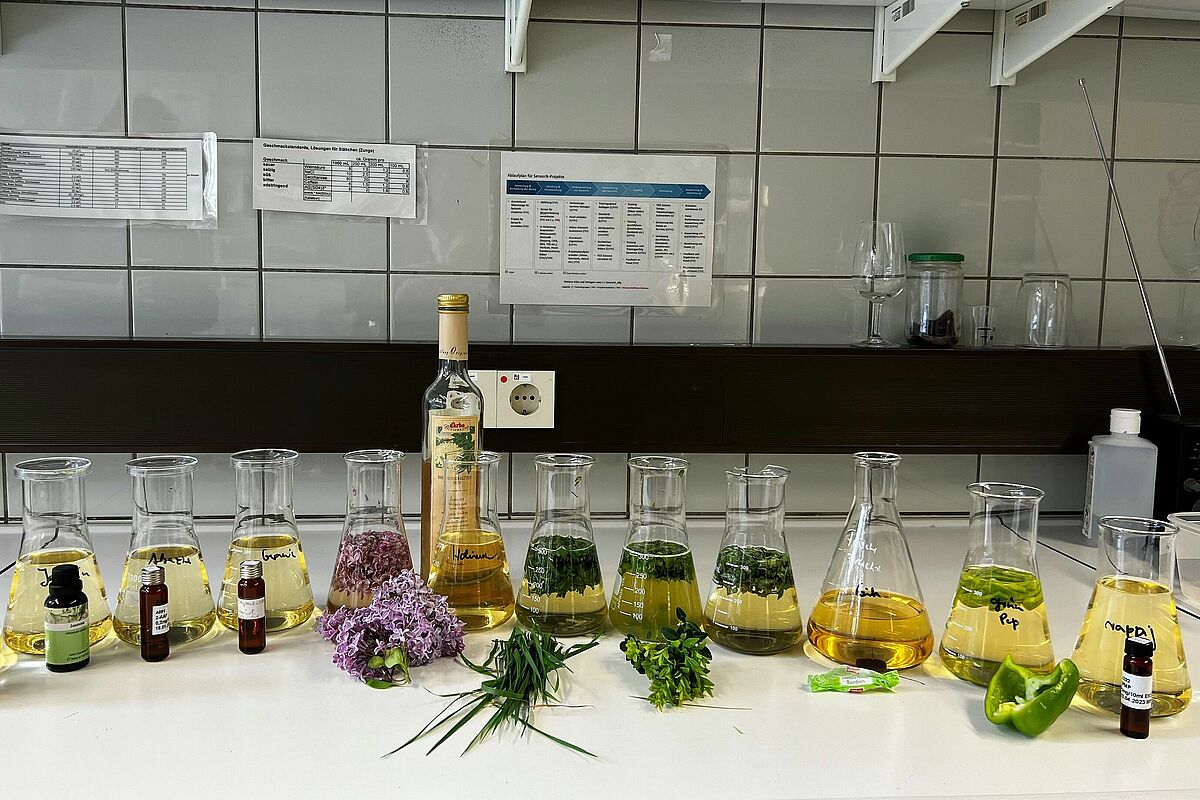
Odor training in the sensory lab

Lecturer Leonard Pfahl during a measurement of vitality data of the vines with a multispectral drone.

Density measurements to assess the progress of alcoholic fermentation in experimental wines as part of a practical project in the 4th semester at the Oenological Technical Center
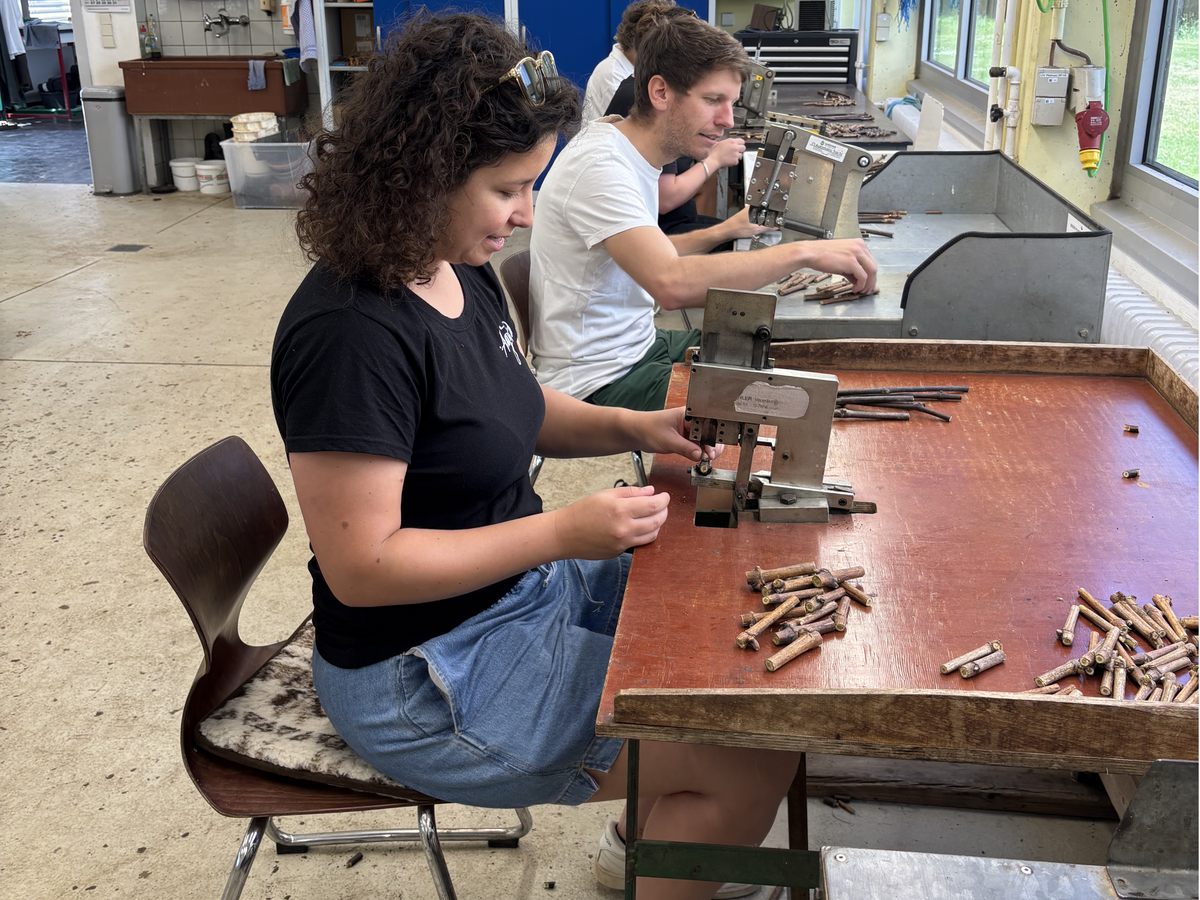
The cuttings of the rootstock and the scion are joined together during table grafting. This creates a grafted vine that combines the desired grape variety of the scion with the characteristics of the rootstock variety.
Craftsmanship, natural sciences and the product wine
Course language: English
Six professors from three universities in Rhineland-Palatinate, along with experts from the Rural Area Service Center (DLR) Rhenish Palatinate, shape the curriculum at the Wine Campus. Through their research projects on climate change, sustainability, fungus-resistant grape varieties, digitalization, and non-alcoholic wines, they bring science to life in their lectures.
This course covers the scientific and practical fundamentals of modern viticulture. Students explore the physiological and biochemical processes of the grapevine and learn how the growth, development, and ripening of the grapes are influenced by location, climate, and viticultural practices. In addition, they study grape varieties, training systems, vine nutrition and fertilization, as well as sustainability in the management of vineyard soils.
Particular emphasis is placed on the connection between theory and practice. In practical exercises and laboratory sessions, students directly apply their knowledge—from assessing grape ripeness and quality grading to analyzing soils, planning fertilization measures, and evaluating modern cultivation and production methods. In this way, they acquire in-depth expertise for quality-oriented and sustainable viticulture.
Phytomedicine provides comprehensive knowledge about vine health and the sustainability of vineyard protection. Students learn to reliably identify fungal, bacterial, and viral pathogens as well as animal pests, understand their biology, and select appropriate measures for prevention and control. The program focuses equally on the principles of integrated pest management, ecological relationships, and resource-conserving strategies.
In addition, students address current challenges such as climate change, the emergence of new pests, and the possibilities of precision viticulture. Laboratory courses and practical projects teach students how to safely use diagnostic procedures, modern plant protection technology, and digital methods. This directly links scientific findings to the demands of practical viticulture.
In the microbiology course, students explore the importance of microorganisms in viticulture and winemaking. They learn about the characteristics and functions of yeasts, bacteria, and other microorganisms and understand their impact on fermentation processes, wine quality, and food safety. In addition, students are taught the fundamentals of molecular biology and modern analytical methods that enable the rapid and reliable identification of microorganisms.
Hands-on laboratory exercises reinforce the theoretical content and teach students how to apply state-of-the-art microbiological and molecular biological methods. Students thus acquire important skills for quality control, research and development, and the application of innovative processes in the wine industry and related fields.
Enology is the science of winemaking. It combines the fundamentals of the natural sciences with state-of-the-art cellar technology and follows the journey of the grape from harvest to finished wine. The goal is to preserve and selectively influence the quality of the grapes through appropriate methods and to produce wines with a distinctive style and high quality.
During the program, students acquire in-depth knowledge of the chemical, microbiological, and technological processes involved in winemaking. They study grape processing, fermentation management, the use of yeasts and lactic acid bacteria, as well as methods for stabilizing, filtering, and aging wines. The program covers the specific characteristics of white and red wine production as well as modern analytical methods for quality control of grapes, must, and wine. Practical exercises and laboratory sessions teach students how to confidently apply winemaking techniques, analytical methods, and modern technology.
A key component of the program is the Enology Practicum. In collaboration with partner wineries, students independently tackle current issues in winemaking. They plan and oversee experiments, analyze different processes, and evaluate their impact on wine quality. The results are scientifically evaluated, documented, and presented collectively. In this way, students combine their theoretical knowledge with practical experience and gain early insights into the challenges and innovations of modern winemaking.
Introductory Lecture on Orange Wine by Prof. Dr. Ulrich Fischer
Knowledge of business administration is a key foundation for the economic success of companies in the wine industry. During the program, students acquire in-depth skills to understand business contexts, make economic decisions, and manage companies with a focus on sustainability.
The courses cover the fundamentals of business administration and provide insights into economic conditions, types of businesses, markets, and business functions. In addition, students learn the fundamentals of accounting, bookkeeping, and financial reporting—from asset valuation and day-to-day bookkeeping to the preparation of annual financial statements. Practical exercises reinforce theoretical knowledge and lay the foundation for entrepreneurial thinking and action in the wine industry.
→ Insights into the elective course “Startup Management”
→ Selection of bachelor’s theses focusing on business administration
Whether it’s a winery, a cooperative, or an international company—successful wines require a well-thought-out marketing strategy. In this program, students learn how to position products strategically, build brands, and successfully tap into markets. The program focuses on both the unique characteristics of the wine industry and current trends in consumer behavior and digital communication.
The courses provide knowledge in the areas of market research, consumer behavior, marketing and sales management, and brand communication. Students analyze target audiences, develop marketing strategies, and learn to apply appropriate tools for product, pricing, communication, and distribution policies. Case studies and practice-oriented projects enable them to develop their own marketing concepts and devise solutions to real-world challenges in the wine industry. In addition, they explore export marketing, wine tourism, digital marketing, and the development of innovative business models for the wine industry.
→ Selection of bachelor’s and master’s theses focusing on marketing
The Heart of the Campus
Experience the Sensory Lab
Off to new horizons
Stays abroad
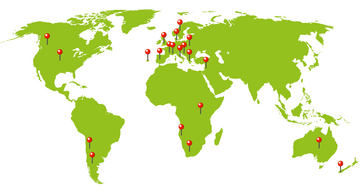
When studying Viticulture and Enology, you have the opportunity to complete up to six months of practical training abroad. Viticulture and winemaking abroad differ in many ways from those in Germany. Students describe it as very enriching to make wine under different climatic and cultural conditions and to discover new grape varieties and cultivation methods. By getting to know the methods and practices of the wineries, you question your own approach and decision-making processes. You will not only benefit from new professional impulses, but also develop intercultural and linguistic skills and expand your international network. In the companies, you immerse yourself in everyday working life and really get to know the country and its people. International experience is highly sought after by employers.
Students have access to over 200 international cooperation companies in the northern and southern hemisphere. This means that students can experience a total of five vintages in four years. The Wine Campus supports stays abroad with scholarships and funding programs. Let us advise you individually!
The Wine Campus' portfolio of international cooperation companies includes the following countries:
- Argentina - Luxembourg
- Australia - Namibia
- Azores - New Zealand
- Chile - Austria
- Denmark - Portugal
- France - Rwanda
- Georgia - Romania
- Greece - Sweden
- Great Britain - Switzerland
- Israel - Spain
- Italy - South Africa
- Croatia - USA
Time frame for practical projects abroad:
After the 4th semester: 01.07. to 31.10. (Northern Hemisphere)
After the 5th semester: 01.02. to 30.04. (Southern Hemisphere)
Further information on visa requirements, insurance and funding opportunities for an internship abroad can be found on the Ludwigshafen University of Business and Society website under International Affairs.


Occupational fields
The demand for graduate winemakers is so high that it cannot be met. Graduates of the Viticulture and Enology degree course usually have a contract in their pocket before their final examination. The subject-specific, topic-specific and interdisciplinary qualification objectives of the course provide graduates with comprehensive skills that enable them to pursue an independent, practice-oriented career in a wide range of fields of activity as well as a further academic career.
The Viticulture and Enology degree program offers a wide range of career prospects in a wide variety of fields, of which the following are examples of many more:
- Winemaker
- Cellar master
- Operations management, CEO or field operations management
- Wine shop manager
- Key account manager
- Wine or beverage editor
- Product developer
- Innovation manager
- Market researcher
- Marketing Manager
- Wine merchant, import/export manager or sales manager
- Tourism manager
- Vine grower
- Laboratory technician
- Research assistant
- Entrepreneur and start-up founder
- Sustainability manager
- Wine and oenology consultant
What our students say
Why I study viticulture and Enology

Miriam Berner, Alumna 2020
Felix Weyer, Alumnus 2025

Philipp Schindel, Alumnus 2025
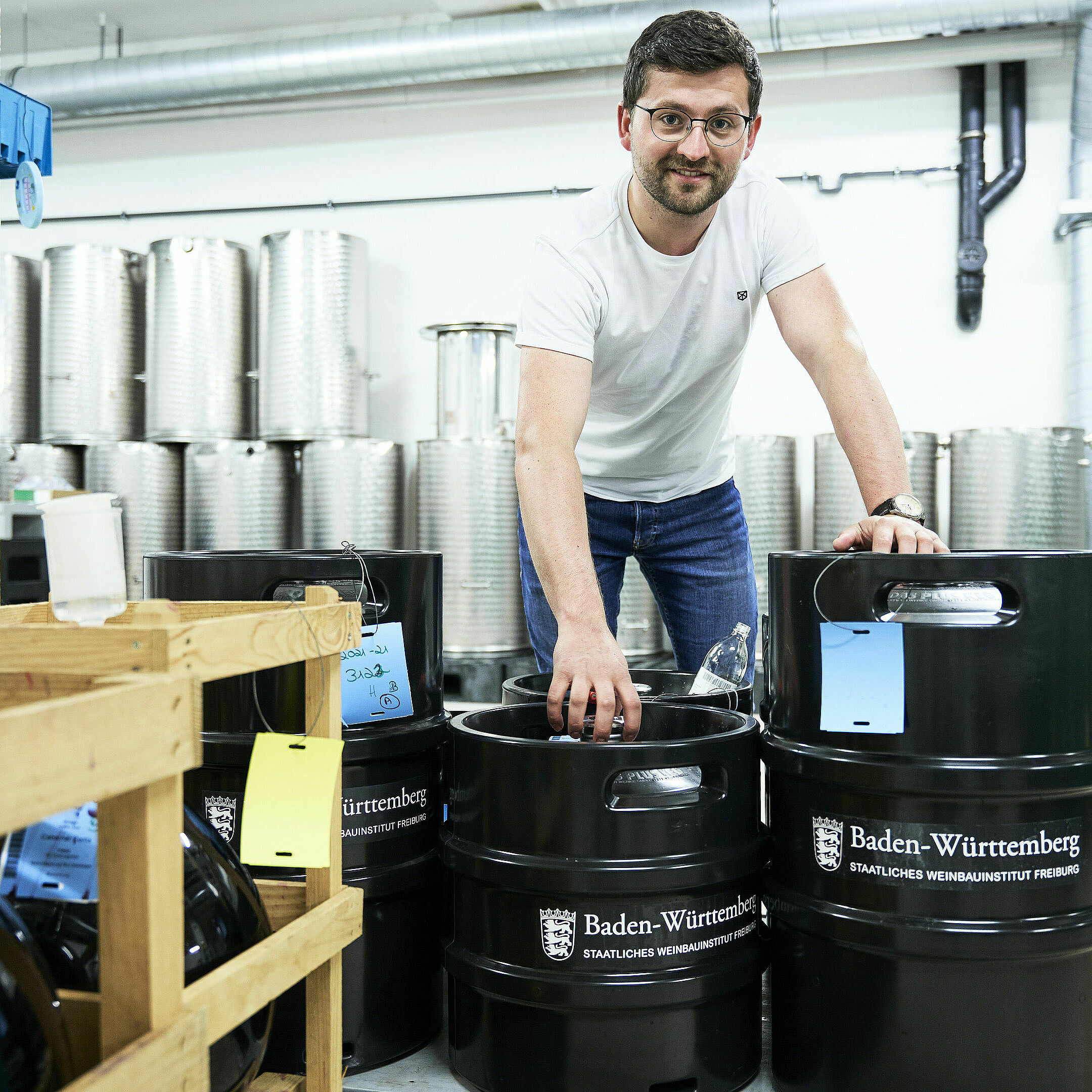
Fabio Fehrenbach, alumnus 2019

Mara Walz

Franziska Schmitt
Johann Seibt

Lukas Hoth
Image sources: Miriam Berner - Anna Ziegler; Felix Weyer - Weingut Bassermann-Jordan/Frei; Fabio Fehrenbach - Staatliches Weinbauinstitut Freiburg; Julia Furer - Private; Philipp Schindel - Private; Viktor Rapp - Private
Interview Niko Brandner (Griesel Sekt, Bensheim)
Interview Katrin Lang (74th German Wine Queen / Advisor to the Baden Winegrowers' Association)
Interview Lena Singer-Fischer (Singer-Fischer Winery, Ingelheim)
Winemaker training
The on-the-job training phase lasts a total of 24 months. The winemaker training program is audited by the Rhineland-Palatinate Chamber of Agriculture. In the Bachelor's degree program in Viticulture and Enology, the Course language: English and times are deliberately adapted to the viticultural year. This gives you maximum practical experience. The four practical projects focusing on viticulture, Enology, phytomedicine and wine marketing take place in the training companies and are assessed as examination results.
Training companies can be located in any wine-growing region in Germany . Companies in Luxembourg can also be recognized as training companies - contact us for individual advice on the requirements!
If the training company you have selected is not one of our cooperation companies, we will be happy to include it in our network, provided the company is a recognized training company for winegrowers.
With the Dual Match Apprenticeship Finder, the Wine Campus supports you in your search for a suitable company. The aim of the Apprenticeship Finder is to bring prospective students together with suitable winegrowing companies quickly, easily and securely. You create an applicant profile in the portal and present your skills, previous knowledge and interests. If you are interested in an apprenticeship, you can contact one of our many cooperating companies directly. Conversely, it is possible for a cooperating company to draw your attention to a vacant training position.
→ DOWNLOAD AREA
Training contract, remuneration tables + insurance guidelines
DUAL MATCH

DUAL MATCH - FIND THE PERFECT TRAINING COMPANY
Register now and discover over 400 cooperating companies!
Admission requirements
→ GENERAL ADMISSION REQUIREMENTS
The Bachelor's degree course in Viticulture and Enology is admission-free . This means that prospective students will always be offered a spot if they meet the formal requirements for the degree program (university entrance qualification, language skills, etc.) and apply in due form and time. There is no numerus clausus. You will be awarded a spot if you meet the admission requirements and apply in due form and time. The course starts at the beginning of August.
Admission requirements for the Viticulture and Enology degree course are
- higher education entrance qualification certificate,
- entrance qualification for universities of applied sciences
- or a professional qualification recognized as equivalent
- and a training contract as a winemaker
You cover the practical part of the entrance qualification for universities of applied sciences with the winemaker training.
→ MASTER CRAFTSMAN'S CERTIFICATE OR COMPARABLE ADVANCED TRAINING QUALIFICATIONS
A master craftsman's certificate or comparable advanced training qualifications offer you a direct university entrance qualification.
→ STUDYING WITHOUT A HIGH SCHOOL DIPLOMA
In Rhineland-Palatinate, it is possible to study with a vocational qualification ("studying without an Abitur") if you have completed previous vocational training with an overall grade point average of at least 2.5. The grades from the final vocational training examination and the final certificate from the vocational school are taken into account.
We advise prospective students without an Abitur before enrolment. Please make an appointment with our registrar' s office
If documents are not yet available at the time of application, please send us ...
- your last (half-year) school report and submit the final certificate
- the vocational training contract signed by you and your training company. You will then send us the contract signed by the body responsible for the training.
If your previous vocational training is as a winemaker or wine technologist, you can apply directly for the six-semester degree course in Viticulture and Enology (Bachelor of Science).
→ LINKS
University admission correction through further education qualifications
Information on "Studying without Abitur"
State ordinance on the direct university entrance qualification of professionally qualified persons
Application
THE APPLICATION DEADLINE FOR THE BACHELOR'S DEGREE PROGRAM IN VITICULTURE AND ENOLOGY IS JULY 15
Step 1: Conclude a training contract as a winemaker
Step 2: Fill out and submit the online application form
Step 3: Sign application form (PDF) & submit application documents by e-mail
Note: Enrollment at the Ludwigshafen University of Business and Society (HWG LU) takes place in the winter semester of the following year. Further information on enrollment and re-registration can be found here.
FAQ
Can I be sure that my studies and training are actually compatible?
I don't know whether the Viticulture and Enology degree program really suits me. What interests should I bring with me?
What is the prosemester?
Do I earn money during my training?
What scholarships are available to me?
Is it possible to do an Erasmus+ semester abroad during my studies?
Are there funding opportunities for stays abroad?
Am I covered by social insurance during the dual study program?
How do I find an apartment or shared room in Neustadt? Will the Wine Campus support me in my search?
Are there offers beyond the curriculum that I can use to expand my know-how?
Is it possible to take the exam to become a trainer while studying?
Contact us now!
Prof. Dr. Jochen Bogs

Sabine Delb
Veronika Trum
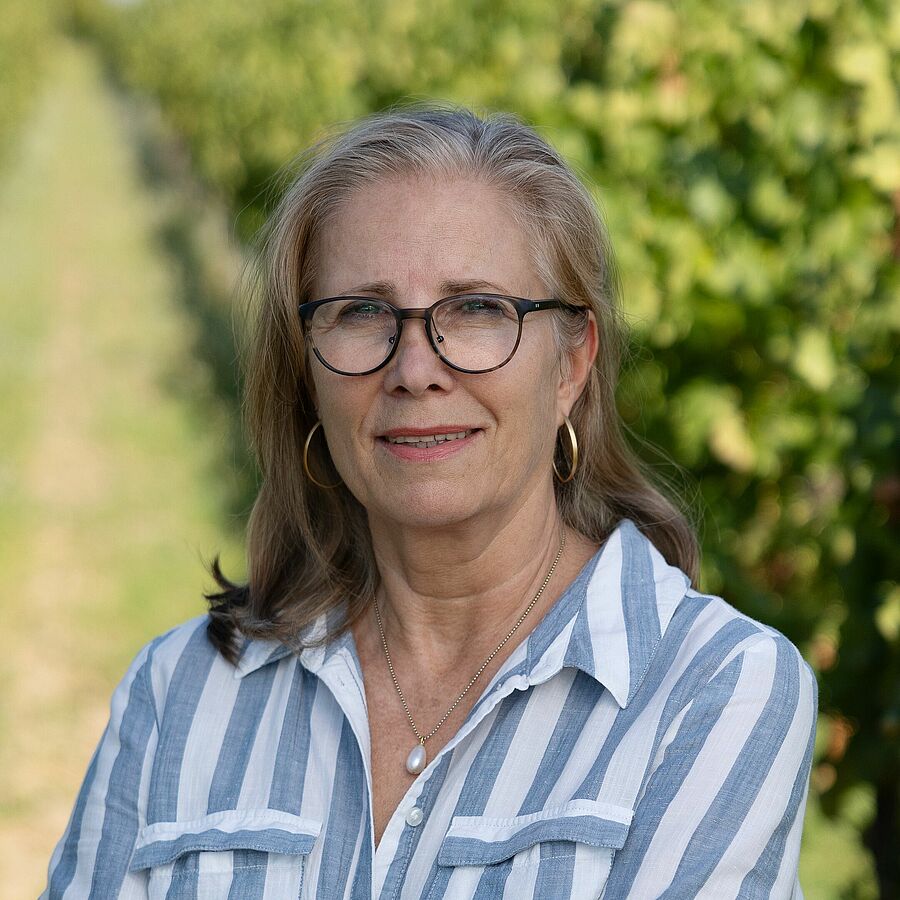
Ask Vro!
Individual study advice at the registrar's office:
If you are still looking for a training company or have questions about the Admission requirements for studying, then ask Vro! You can also reach us by telephone on 06321 - 671 509.