
"The wait for the federal government to return was grueling."
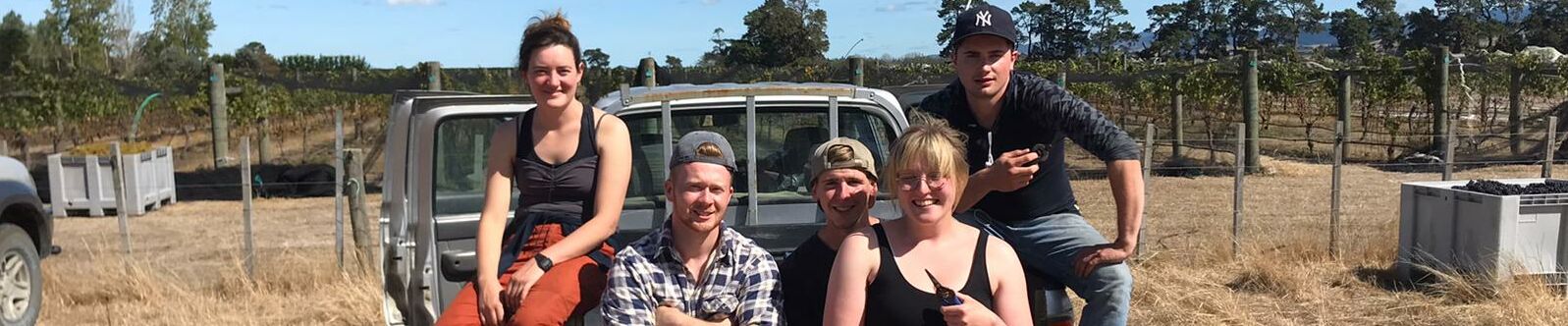
Lotte Iglhaut, a student in the dual degree program in Viticulture and Enology (6th semester) at the Wine Campus Neustadt, spent her semester abroad in New Zealand. She has been working at Johner Estate Winery in Masterton for the past few weeks and was brought back by the German government. At first, it was a time of new challenges and getting a taste of life on the other side of the world. But because of COVID-19, everything turned out differently than expected. In this interview, she tells us about her experience of the lockdown in New Zealand.
1. Where are you right now, and what have the last 3–4 weeks been like for you?
I was still in New Zealand until yesterday. At first, I mainly heard about the COVID-19 crisis through the news and conversations with friends back home. Back then, the whole situation still felt very far away in New Zealand. It felt like New Zealand was about four weeks behind the rest of the world in terms of the pandemic’s progression. And then the situation changed pretty quickly. The first leg of our return flight to Australia was canceled; many airlines were no longer flying to Frankfurt; and then I received a text message saying that the New Zealand government had ordered a “lockdown.” The message essentially stated that wherever you were spending the following night, you’d have to stay there for the next four weeks. Suddenly, you didn’t even know if you were still allowed to work, because only those employed in “essential businesses” were permitted to work at all. Only grocery stores were open, and shopping in groups was no longer allowed. If you’re out and about, you might be stopped by the police and will have to explain and provide proof of why you’re going where you’re going. Apparently, New Zealanders have learned from the situations in other countries and are determined not to let things get that far.
2. What’s your daily life like right now? Are you waiting to be repatriated?
We were at the winery with other Germans and registered together for the repatriation effort. Every day, we checked our emails and Instagram multiple times for new updates. Waiting for the repatriation was grueling. On the one hand, you really don’t want to leave. Leaving our employer in the middle of fall was the last thing we wanted to do. On the other hand, you want certainty and would just like to have a flight date. After the first two flights, the repatriation effort was put on hold again to sort out some urgently needed organizational details, including with the New Zealand government. That gave us a little more time. You feel very torn. We want to enjoy these last few days as much as possible, but the uncertainty causes a constant queasy feeling in the stomach. The new work requirements are exhausting at first. In the staff kitchen, all plates, glasses, and utensils have to be separated by person in case an inspection comes to the winery. The shared rooms are being rearranged, and I’ve moved into the wine shop, which is closed anyway. Another intern had to set up camp in the bottle storage room among the pallets of wine.
3. Are you able to meet your academic requirements as expected?
For the most part, meeting my academic requirements isn’t a problem. For our marketing practicum project, we would have liked to spend more time in the wine shop while it was open, but fortunately we had plenty of opportunity to do so at the beginning. Fortunately, I only had two months left to complete my internship as well.
4. Are there any specific measures in your current host country that you view as particularly positive or negative?
At first, the complete lockdown—despite very few cases of the disease—seemed a bit extreme. In hindsight, New Zealand learned from the mistakes of other countries and took decisive action right away. At the same time as the lockdown, relief packages for small businesses were approved, and ultimately, that early decisive action helped ensure that we might be able to return to normal sooner.
5. How has your perspective changed because of the pandemic?
Our accommodations at the winery were very basic; it felt a bit like spending weeks at a campground. However, when you hear about how some backpackers fared—stuck in shared hostel rooms during the lockdown, unable to leave, even when a roommate gets sick and they’re slowly running out of money, you wouldn’t even think of complaining about having to walk across the courtyard to take a shower. Suddenly, you realize how good you have it—with safe housing, the ability to go shopping, and still being able to go to work.
6. As dual-track students, you’re already in the middle of your professional lives. What specific impact has the COVID-19 crisis had on your partner company?
My partner company in New Zealand lost half its staff due to the crisis and our return home. Fortunately, the repatriation program was delayed enough that we were able to finish most of the harvest before we flew back. Another major factor, of course, is the sharp drop in revenue. The restaurant industry has completely disappeared as a customer base; many people can’t go to work and are experiencing a loss of income, so even at the supermarket, wine is at the very bottom of the shopping list for now.
My partner winery in Germany is currently renovating its cellar. In addition to the difficult revenue situation, there’s concern that construction will be delayed and the new cellar won’t be ready in time for next fall.