
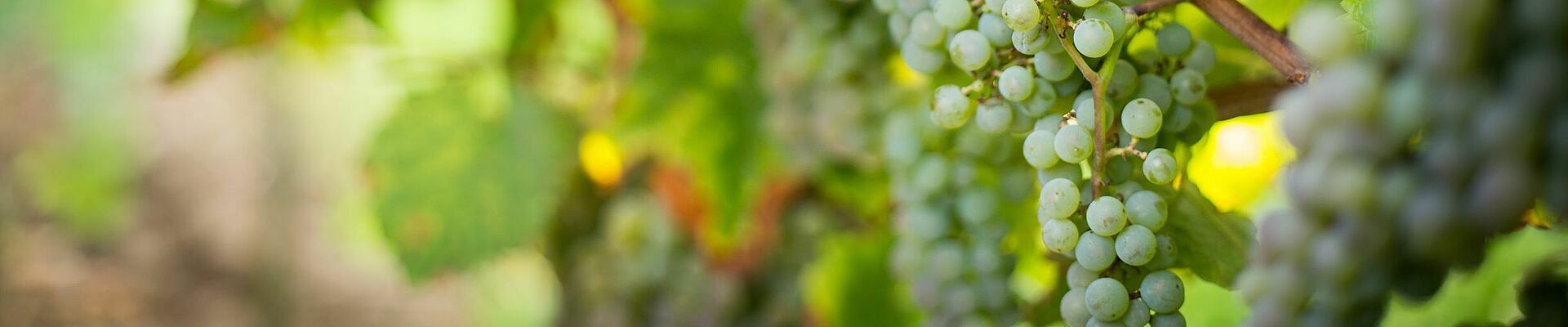
Prof. Dr. Lena Keller receives funding from the Carl Zeiss Foundation
Research on antibacterial and antifungal natural compounds from and for grapevines (Vitis vinifera), Lena Keller, professor of Enology and process engineering at the Wine Campus Neustadt, has received a grant from the Carl Zeiss Foundation.
In an interview: Prof. Lena Keller
You have a background in pharmacy and are therefore a career changer in the field of winemaking. What motivated you to join a scientific institution for viticulture and Enology?
I come from pharmaceutical research, specifically from the field of natural product research. Wine is a natural product that contains a great many natural substances. It’s reasonable to assume that some of these have a pharmaceutical effect, since aroma and flavor compounds differ little in their mode of action from medicinal substances—both typically consist of small molecules that bind to specific target structures in our bodies and thus trigger an effect. The analytical approach to studying these molecules is also very similar. Both fields of research thus share many parallels, which ultimately motivated me to pursue this highly application-oriented direction and to apply the methods from natural product research to the extremely complex subject of wine. A nice side effect is that I can combine my personal interest with my research focus on wine.
Your project has been approved for two years. Have you already assembled your research group?
No, my research group is currently being established. So far, I’ve been able to recruit one Ph.D. student for the group. In addition, the grant from the Carl Zeiss Foundation includes a postdoctoral position, for which the hiring process is still underway. Several promising international candidates have already applied for the position. In the long term, my goal is for the research group to continue growing so that we can work together on many exciting topics.
The goal of the project is to identify and characterize new antimicrobial natural compounds from wine byproducts. We’re particularly interested in their potential use in the development of new pharmaceuticals. Will your new field of research add entirely new dimensions to research at the Wine Campus in general and to wine research in particular?
Yes, I think so, precisely because the entire sensory impression that wine leaves is based on the chemistry and effects of individual components. Although relatively much is already known about individual flavor and aroma compounds, it is still extremely difficult to grasp their complex interplay as a whole. This is referred to as “metabolomics.” This research approach has gained increasing importance in recent years, particularly in the life sciences. Therefore, in addition to research on natural products, I would also like to focus on further developing the analysis of components in must and wine. Furthermore, I hope to establish links to biotechnology and pharmaceutical research.
Which wine byproducts will you focus on?
That hasn’t been determined yet. Grape pomace would be one possibility. However, plant components such as wood and leaves, which are produced during pruning, are also candidates. Our project is primarily concerned with antimicrobial substances that are effective against bacteria and fungi. Not much research has been done in this area so far—neither regarding the mechanisms of action nor the identification and isolation of key substances. The research project will primarily use materials from grape varieties that are sustainable and fungus-resistant (Piwi varieties) to minimize the likelihood of any pesticide residues in or on the plant as much as possible. This is a fundamental requirement for the project, as we are specifically searching for antifungal substances and pesticide residues would interfere with the tests. Furthermore, by using grape varieties that are sustainable, we are supporting the goal of the EU’s Green Deal, which aims, among other things, to reduce pesticide use in agriculture—and thus also in viticulture.
Grape seeds, with their OPCs (oligomeric proanthocyanidins), are said to have health-promoting effects. Will they also be part of your “” analysis?
Yes. Grape seeds are also a component of grape pomace. A wide range of effects has already been demonstrated for them, and there are numerous studies on their antioxidant potential. However, specific research into their antimicrobial properties is still lacking. The most extensively studied grape compound to date—and a true all-rounder—is resveratrol. As a component of red wine, it has been well studied for its health effects and has also shown antibacterial and antifungal effects in studies—however, such substances are generally less suitable for drug development because they lack a specific mechanism of action.
To what extent does your research have practical relevance for your teaching at the Wine Campus?
The chemical and analytical insights we’ve gained are particularly important. I expect this to provide significant added value, especially for the field of instrumental wine analysis, which is an integral part of the theoretical and practical training at the Wine Campus.
Given these significant gaps in the research landscape, might two years of project funding be a bit too short?
The Carl Zeiss Foundation’s aim with this grant for newly appointed professors is not only to enable the recipients to carry out a good research project but also to help them get their research off the ground and support them in strengthening their research topic for the future. For Germany as a research hub, the hope is that this will lead to optimal use of the research expertise gained in the private sector for further development at universities. During the two-year project period, the foundation for further research will be laid, and the results obtained will serve as a starting point for future grant applications. Nevertheless, we naturally hope to produce results that can be put to use right away.
Nature holds many pharmaceutical treasures: The neurotoxin Botox originates from the bacterium Clostridium botulinum and owes its discovery to a German physician who noticed the highly toxic bacteria on spoiled meat. Willow bark extract was the basis for aspirin, which remains the most successful drug to date. Can we also expect a similarly groundbreaking discovery from the upcoming research?
Research into natural products—and pharmaceutical research in particular—is a bit like playing the lottery. On average, one drug emerges from every 10,000 or so substances investigated in pharmaceutical research. Whether we’ll strike such a lucky break will become clear in 10–20 years. But the more and the more intensively research is conducted, the higher the probability of success. This doesn’t mean that only substances that ultimately lead to drugs are significant. New knowledge is constantly being generated for pharmaceutical research. Compounds may find other applications, such as in diagnostics. For natural product research, it is important to expand the chemical space we know and to utilize it for pharmaceutical research. And we will be able to contribute to that in this project.