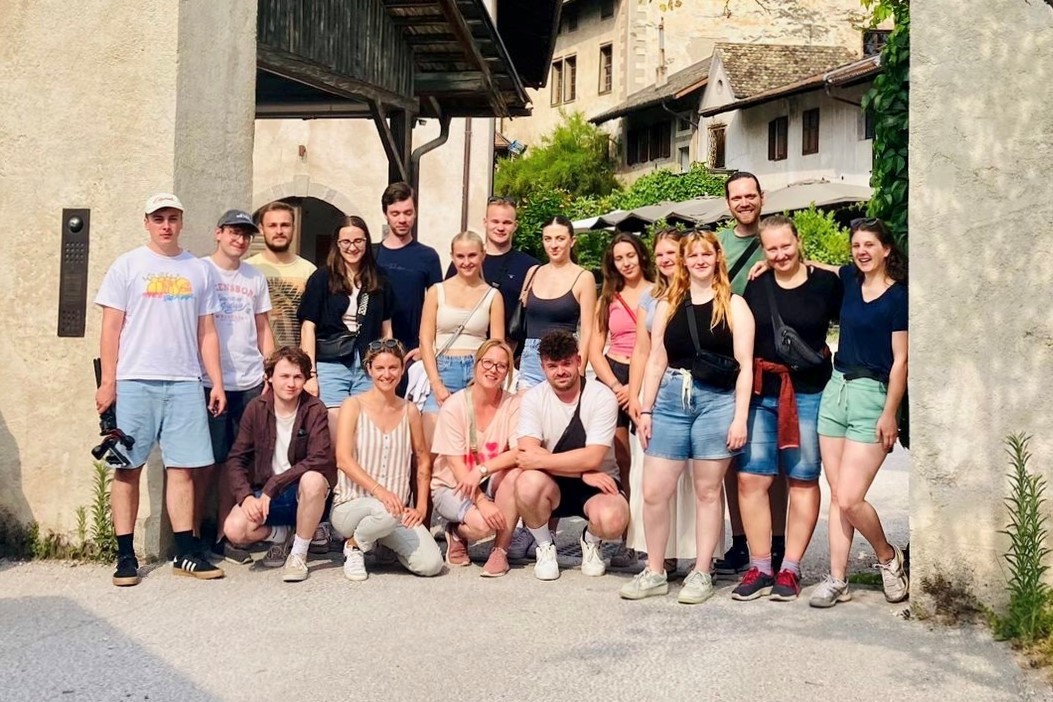

Review: Bachelor students on an excursion to South Tyrol
In July of this year, 16 students in the dual Bachelor’s program in Viticulture and Enology traveled to South Tyrol for a week with great enthusiasm. Part of the field trip involved exploring the topic: “How is climate change affecting wine production?” This question gave the students the opportunity to learn about alternative vine training systems, including the traditional pergola system, which has been used in South Tyrol for many years and offers significant advantages in light of climate change. South Tyrol is one of Italy’s smallest yet most diverse wine-growing regions, with 5,400 hectares of vineyards across various climate zones and altitudes.
To explore the topic “How is climate change affecting wine production?” in greater depth, the students visited numerous wineries in South Tyrol. These included the Alois Lageder Winery, a pioneer in organic viticulture using PIWI grape varieties; the Arunda sparkling wine cellars, which produce sparkling wine at an elevation of 1,200 meters above sea level; and one of Italy’s best-known women-led wineries, the Elena Walch Winery. The balancing act between tradition and innovation became clear, for example at the Tramin Winery with its famous Gewürztraminer. The Manincor Winery focuses on organic farming and sustainability. A special highlight for the group was that Manincor’s winemaker is a former student of the Wine Campus. Also on the itinerary was the Castel Juval Winery, which captures the uniqueness of the Juval hill on 4.3 hectares of steep slopes. To conclude the trip, the students visited the Laimburg State Winery, which, as a research institution, presented exciting projects on so-called “wines of the future” (PIWI grape varieties).
(An article by Pascal Millen and Paul Eichberger)